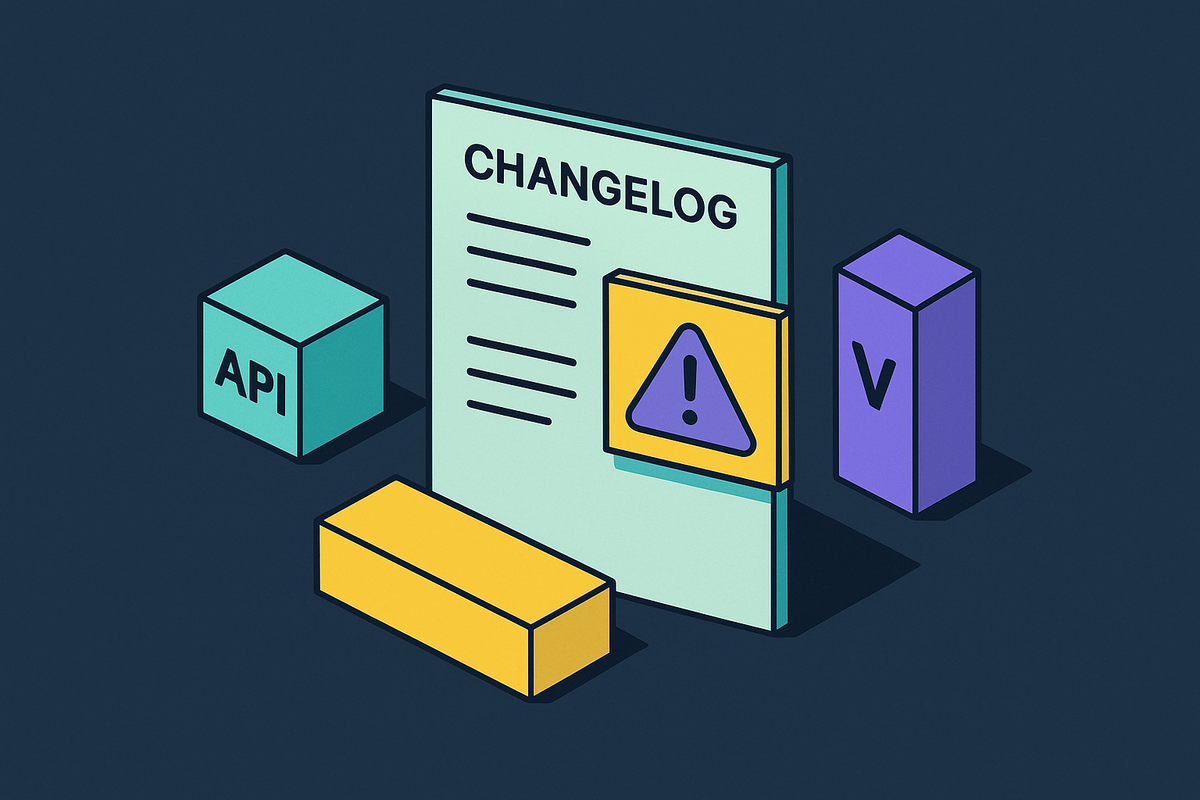
Internal vs Public Changelog Audiences and Entry Scoping
Different audiences need different changelogs built from the same source material.
A product's changelog fails the moment it tries to serve everyone at once, and the failure is structural. A support engineer opens a ticket at 8 a.m. about a feature a customer is already using, a feature nobody on the support team was told had shipped, and the changelog that was supposed to prevent exactly that sits one tab over, silent on the matter.
Why the single-changelog default breaks as a product grows
Most product teams start with one changelog and stretch it across every audience that might need it, and for a while that works. It stops working once the document is asked to answer four separate questions at the same time: what changed technically, what customers can now do, what support and sales need to know internally, and what is safe to publish outside the company. No single format can hold all four of those framings without compromising at least one of them, because the audiences reading it want fundamentally different things from the same event.
Support tickets reference changes that never made it into the public release notes before anyone names the underlying cause. None of these are failures of effort. They are failures of format, because the document was built to do one job and is being asked to do four.
Cadence makes the mismatch worse. A public changelog running at that same pace floods customers with detail they have no use for, and a public changelog throttled down to protect customers starves the internal teams who needed that detail in real time. Trying to find a middle cadence that works for both groups just produces a document that's too slow for engineering and too noisy for customers.
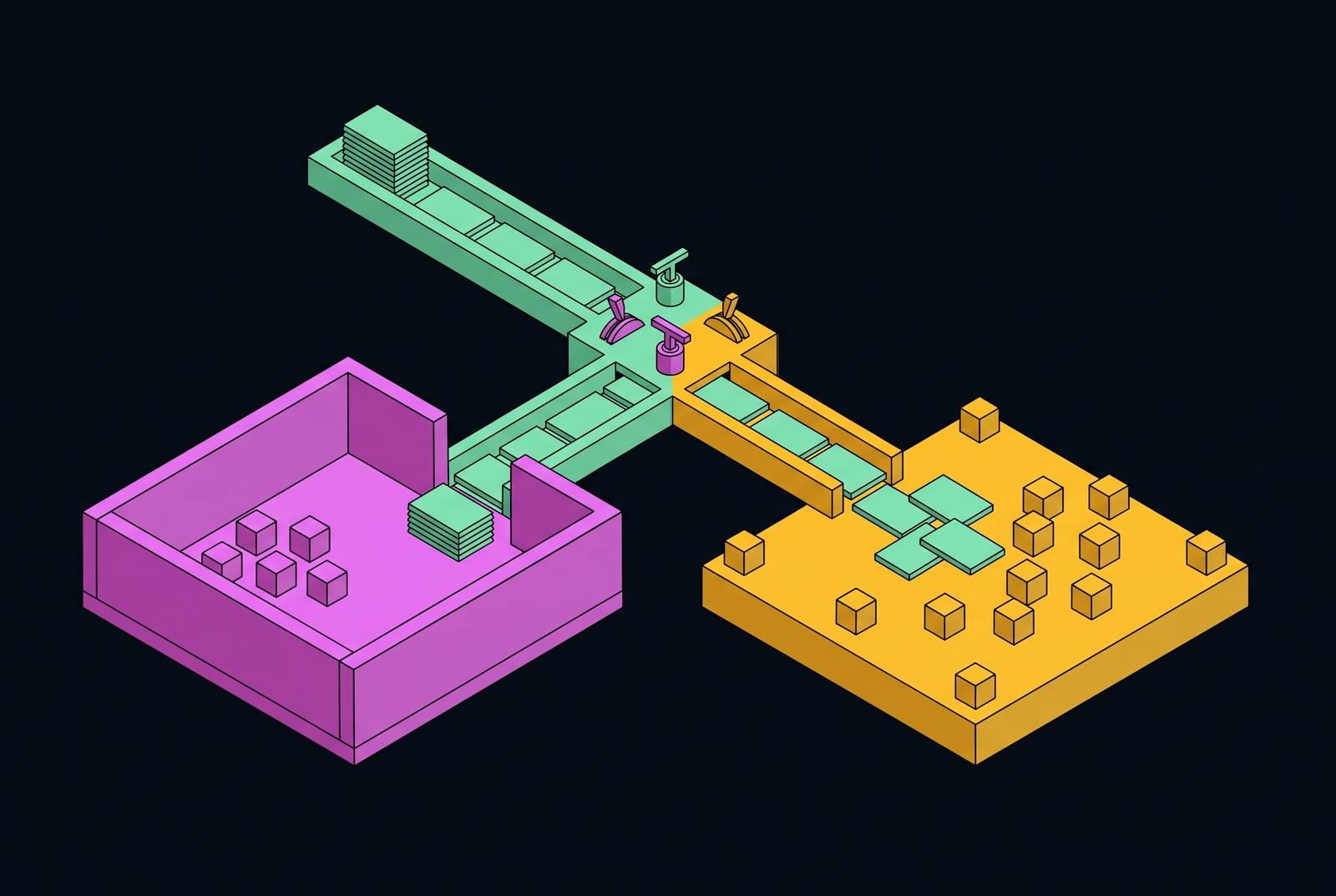
The fix is two documents, or three, built from the same source but governed by distinct scoping rules for each audience, so each reader gets a changelog built to answer the question they actually came with.
What internal and public audiences need from a changelog
Internal and public readers aren't the same reader at two different reading levels.
The internal audience, which spans engineering, support, sales, ops, and finance, asks something close to: what changed in our product, in full detail, including things that never surface to a customer? None of that belongs in anything a customer will read.
The public audience, made up of customers, prospects, analysts, and developers integrating against an API, asks a narrower and more practical question: what has changed that matters to the reader? That reader needs user-benefit framing, migration guidance where it applies, and language that doesn't assume familiarity with internal systems. Queue names, file paths, and A/B test arm assignments add nothing for this reader and actively get in the way.
The same release can produce two framings that are both accurate and mutually unusable across audiences. Neither sentence is wrong. They're answers to two different questions, written for two different readers who would each find the other's version either useless or confusing.
Confidentiality adds a constraint that can't be negotiated around. Internal entries routinely include security patches under embargo, live pricing experiments, and A/B test arm assignments, and a policy of publishing everything turns those entries into an unintentional information leak the moment they touch a public-facing page.
There's a further split inside the internal audience itself that's easy to miss. The engineering changelog, tracking every deploy, every dependency bump, every infrastructure change, is a different document from the cross-functional internal changelog aimed at CS, sales, ops, and finance. The engineering-depth record can live where it already lives: in git logs and in Slack, available to whoever needs to dig, without needing to be curated for a broader audience.
The three-layer model that resolves the split without tripling the work
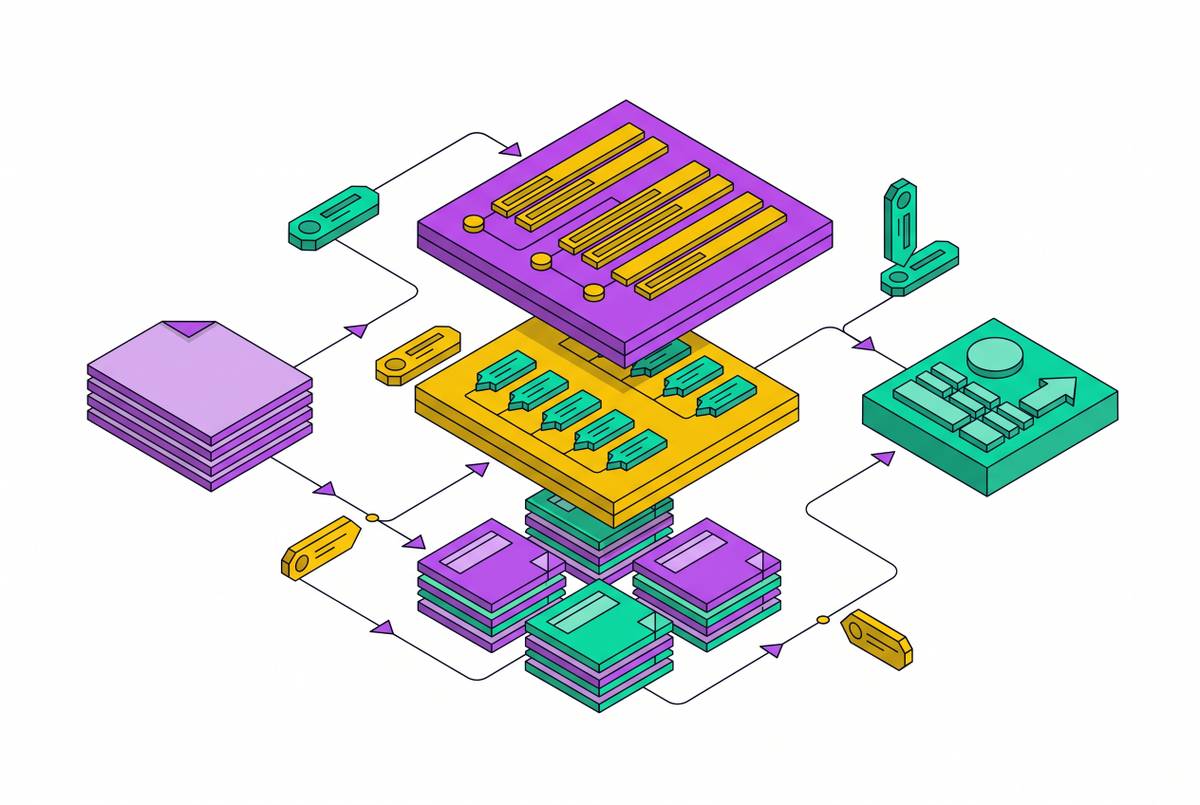
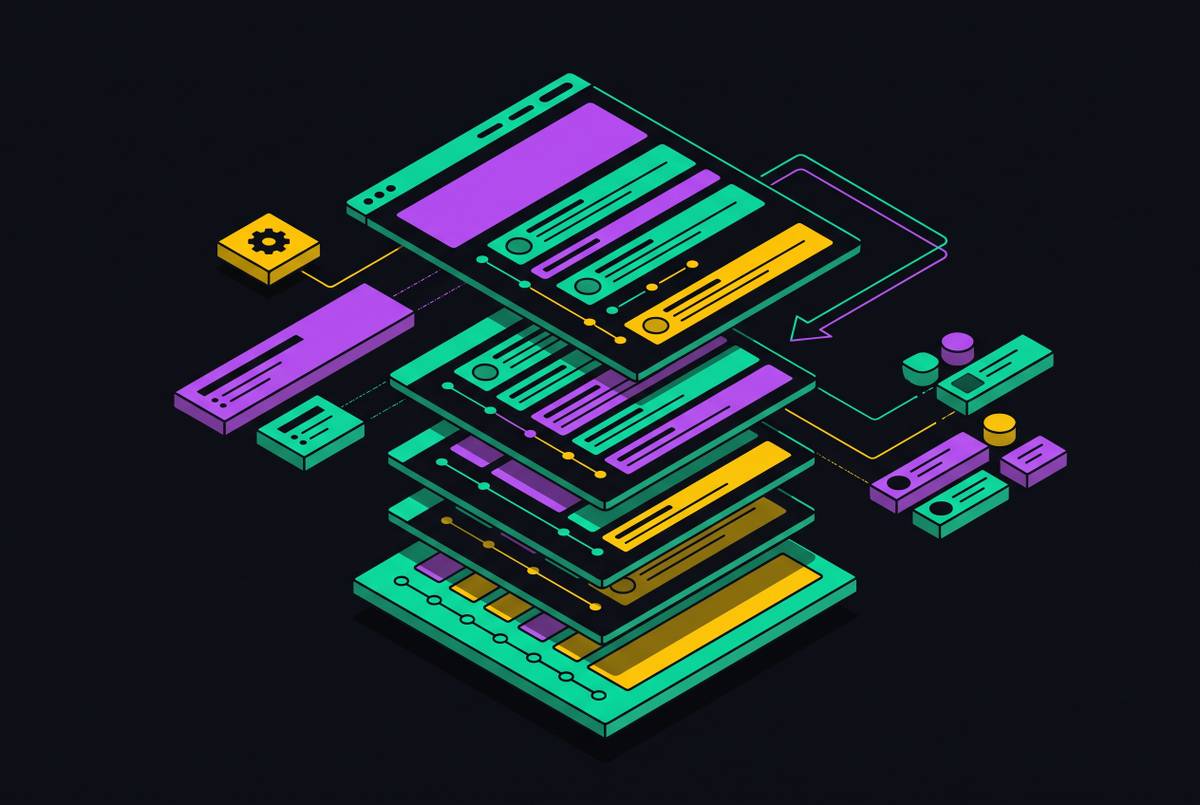
A mature changelog operation handles this by deriving three distinct documents from the same source commits, with each one reframed from scratch rather than edited down from whichever version came before it.
Layer one is the technical changelog, living in CHANGELOG.md inside the repository, following the Keep a Changelog convention of Added, Changed, Deprecated, Removed, Fixed, and Security.
Layer two is the public changelog, living at a public URL, built from dated entries with plain-language descriptions and screenshots.
Layer three is the cross-functional internal changelog described earlier, the curated feed for CS, sales, ops, and finance that sits apart from both the raw engineering log and the public-facing page.
What makes the model hold together is discipline at the writing stage, not the number of documents. The technical changelog cites file paths. The public changelog cites user actions. The internal newsletter cites user impact for the teams who need to explain it to customers directly. These are the same underlying source commit, written three separate times from three separate starting questions, not one text lightly edited and republished twice more.
The test that decides whether a change belongs in the public layer is simple to apply and hard to fake: what can users do now that they couldn't do before, and what is better about something they already use? If the honest answer is nothing visible to users, the change stays in the internal or technical layer and goes no further.
The coordination overhead of keeping three separate narratives current from the same source feels unsustainable without some form of automation, and that difficulty is precisely why many teams eventually let the public changelog lapse.
What the internal layer must contain
The internal changelog earns its keep by capturing coordination signals that have no place in a public document but that non-engineering teams genuinely depend on to do their jobs.
A minimum viable internal entry logs things like feature-flag flips, specifying which flag, which environment, and what percentage of traffic it's rolled out to. It logs incidents with a one-line resolution summary, staging and preview environment changes with access notes, decision-log entries for things like integration sunsets, and policy or pricing changes that affect how internal teams operate day to day.
Some things stay out deliberately. Routine deploys with no behavior change don't need an entry. Anything under NDA or inside an active security embargo goes to a dedicated private security channel instead, not into the general internal feed. Team-level status updates belong in standups, not in a changelog meant to serve the whole organization.
The confidentiality boundary here isn't a style preference, it's an operational requirement. A/B test arms, rollout percentages, and security patches during embargo windows need to be documented internally and need to be excluded externally, and treating that boundary as a discretionary editorial call rather than a fixed rule creates real audit and compliance exposure for any product selling into enterprise accounts. For teams doing enterprise sales specifically, that internal record becomes the raw material for the compliance-grade change documentation customers request during procurement, a level of detail the public changelog was never built to carry and shouldn't be asked to.
How the public layer creates compounding value
A well-maintained public changelog compounds value across three outcomes that an internal-only or login-gated changelog simply cannot reach: search discoverability, feature adoption, and prospect trust.
The search mechanism is straightforward. The SEO value depends on the page being crawlable, and the trust value depends on prospects actually being able to see it, so prospects evaluating the product lose the signal entirely, since shipping velocity functions as a buying signal only when they can observe it.
Feature adoption follows a similar logic. Users who encounter a new capability through a changelog newsletter are more likely to try it than users who stumble onto it by accident, which makes the changelog a launch surface in its own right, one that doesn't depend on the limited attention a single product-launch tweet can command.
Trust compounds the same way over a longer time horizon. A public record of continuous, visible improvement tells a prospect the product is actively maintained, and the changelog becomes evidence of that momentum.
Signals that tell you when to split
Not every team needs two changelogs on day one. The split earns its overhead once specific coordination failures appear in support tickets, customer complaints, or shadow changelogs, and attempting the split before those signals show up just adds process without return.
A handful of observable triggers tend to show up together when the moment has actually arrived: internal teams start keeping their own ad-hoc shadow changelogs because the official one no longer serves them; support tickets start referencing changes absent from the public release notes; customers start complaining the changelog reads either too technical or too noisy; the team has grown past the point where everyone already knows what shipped last week; and enterprise sales has begun, with compliance teams now requesting detailed change records as part of procurement.
Teams that haven't hit those conditions, running simple products at modest shipping velocity with audiences that substantially overlap, can run one well-written document without degrading either side of it.
The strongest objection to splitting is governance cost, and it deserves a direct answer rather than a soft one: unowned internal changelogs collapse within three months. The split is a sign a product has reached a scale that demands it, not a practice worth adopting ahead of that need.
Plausible Analytics is the clearest counterpoint to the idea that simplicity is a failure mode. Their changelog is a plain page on their own website, written in short paragraphs, linking out to their documentation when a reader wants more detail, with a general pointer to GitHub at the bottom for anyone who wants the full commit history. It works because the writing is clear, the updates are meaningful, and the format fits the brand, not because a separate internal document was secretly necessary and simply skipped. When audiences are close enough together, one document can still do the job.
Three operational models for running the internal changelog
Once a team decides the internal changelog needs its own home, the wrong model will cause it to wither, while the right one lets it survive. The right fit depends on team size and on how closely engineering and non-engineering stakeholders already sit to each other.
The first model is a Slack channel, something like #shipped or #internal-changelog. It carries the lowest friction to start: engineers drop a note the moment something ships, and CS asks clarifying questions directly in the thread. It suits teams under twenty people running a near-daily cadence, and it tends to fail silently once headcount doubles, because Slack threads become hard to surface at scale when search is keyword-only and relevance ranking is poor.
The second model is a Notion or Linear page maintained by a designated lead: a reverse-chronological record with structured entries that's searchable and linkable in a way Slack threads aren't. It requires one person to actually own the cadence, and it breaks the moment that owner changes roles or leaves without a proper handoff.
The third model is a dedicated changelog tool with audience tagging, where entries get marked internal-only or public at the moment of creation and visibility is controlled per audience from there. These tools typically integrate with GitHub PR merges, with Linear or Jira tickets, and with deploy bots. This is the right model once a team has passed the point where the Slack or Notion approach is generating more coordination cost than it's saving.
One governance rule applies across all three: ownership needs to be named before the model is chosen. An internal changelog without a named owner collapses within months regardless of which tool it lives in.
Scoping entries at the moment of the change, not after the fact
The single most common implementation error is treating the public changelog as the internal one, edited down after the fact. The result satisfies neither audience, because the editing pass arrives too late to fix the underlying problem.
Direct translation from an internal entry to a public one doesn't work, because the two documents are answering different questions from the start. Turning one into the other means rewriting it in full, costing as much effort as writing it fresh while discarding the chance to have started from the right question.
The scoping decision, which audience or audiences a given change needs to reach and what each one needs to know, belongs at the moment the change is recorded. That's when the person who made the change still has full context: which flag was flipped and at what percentage, what the user-facing behavior change amounts to, and whether anything in it can't be published.
For API and spec-driven products, this scoping step can be automated at the signal level. A tool that detects a breaking change inside an OpenAPI or AsyncAPI file can classify it immediately as both an internal engineering note and a public-facing breaking-change alert, with no human editorial step in between, since the spec commit itself is the trigger and the audience tag follows directly from the type of change detected.
Some changes genuinely belong in both documents, written with different framing for each, as two entries, each written to answer a different question from a different reader.
The practical core of the three-layer model is scoring each change against its audience and against the company's own positioning before a word of the public version gets written, so a change that matters to customers gets reframed and published, and a change that only matters internally stops there. Platforms built to watch releases and specs against a company's positioning, Letterseer among them, are built around exactly that scoring and rewriting step, which turns the three-layer model from a writing burden into a routing decision made once, at the moment the change happens, rather than relitigated every time someone sits down to publish.