Changelog Culture at Fast-Shipping Developer Tool Companies
Changelogs are the highest-leverage marketing channel developer tool companies already own.

For continuously shipping developer tool companies, the changelog is the highest-leverage marketing surface they already own. It makes the work of engineering visible as proof that the product is moving forward. The teams executing this well treat each merged pull request as a possible distribution event, with editorial judgment and brand governance built into the pipeline.
Why developer tool companies already own a marketing channel they are not using
Merged pull requests, tagged releases, and spec changes accumulate as ordinary byproducts of development, while external communication waits for someone to assemble a quarterly email. The raw material is already being produced. What is missing is the system that turns a technical change into a readable account of what a user can now do. That distance between shipping and publication is where product momentum disappears from view.
For a prospect weighing the product, progress that goes unannounced gives no sign that the team is still building it. For an existing user, it offers no prompt to adopt a capability that has already shipped. Unpublished changes create no search opportunity either. The company can therefore maintain a fast engineering cadence while presenting a public record that looks sparse or inactive.
A changelog behind a login preserves an internal record but forfeits its role in prospect evaluation and search visibility. A public page written entirely in commit syntax puts a different hurdle in the reader’s way, making them work out what the implementation details mean in practice. Both arrangements leave useful communication work unfinished. Engineering has produced evidence the rest of the business cannot readily use.
How the changelog became a primary marketing surface, not a compliance record
A public changelog at a stable URL serves several audiences through the same update. It shows prospects that the team is still building, helps existing users find features, and adds product information that people can find through search. Its frequency comes from the shipping cadence itself. Its trust comes from describing changes to the product. That combination moves it from bookkeeping into active marketing.
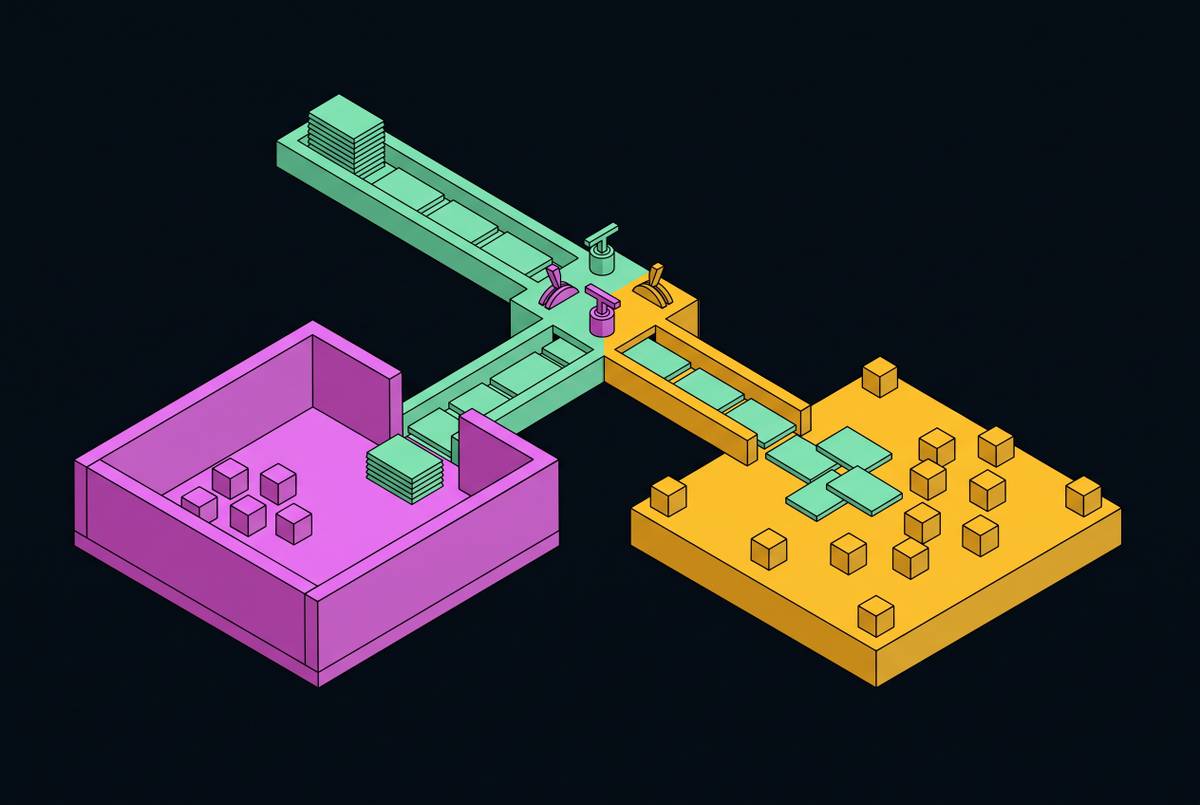
The same source material can support three distinct layers, namely a technical changelog for developers, a public changelog for users, and a changelog newsletter for distribution. Each layer performs a different translation. The technical record preserves the change, the public entry explains its benefit, and the newsletter brings that explanation to readers who would not visit the page. Marketing does not require a separate supply of stories when these layers are connected.
Linear, Vercel, and Resend provide recognizable examples of this approach. Linear uses a regularly published timeline with Improvement, Fix, and API labels, short headlines, two to three sentences, and links to relevant documentation. Vercel publishes at an approximately daily cadence with technical detail and contributor credits, but without PR or documentation links. Resend also publishes at a near-daily cadence. They all rely on a public URL, a steady flow of posts, writing that explains the benefits, and ways to get those posts to readers, with little need for elaborate design.
What separates changelogs people read from ones they ignore
Clear categories tell readers whether a change is a new feature, improvement, or fix before they read the body. Writing that explains the benefit then tells readers what they can do with the change as well as what the team built. These are separate editorial jobs. A category helps someone decide whether to read, while a headline gives them a reason to continue. Both can be done on a small design budget, but each calls for a choice about what matters most to the reader.
Visual support is the third quality, and it must fit the product. Screenshots and GIFs can explain changes to an interface, while code examples and migration snippets work better for changes to a framework. Tailwind CSS uses blog-style posts for major releases to explain new utilities, configuration changes, and why the team made its design choices. Length follows the explanation the change needs. Minimalism is useful when it removes filler while preserving necessary context.
Linear’s restraint helps make frequent publication sustainable, while Notion takes a different approach by bundling major and minor changes into named, narrative releases roughly every two weeks. That hierarchy directs attention without making every change a standalone announcement. Widgets, email, RSS, and in-app notifications then extend the reach of either format. A readable page alone cannot reach users who never seek it out.
Together, these qualities establish the execution bar for automation. A system that publishes frequently but omits the benefit, supporting context, or delivery path has automated only part of the work.
How the most sophisticated teams turn a shipping event into a distribution event
A commit-to-content pipeline starts with the engineering event. It can filter commits marked as features or fixes, draw on conventional commit messages and PR descriptions, and publish from version control. The input still sets the quality limit. A sparse PR description gives the drafting process little basis for explaining why a change is useful.
GitHub Releases gives developers a starting point by creating release notes from merged pull requests when a tag is created. It is free, lives next to the code, and supports RSS/Atom feeds. Drafting tools add another layer of translation. LaunchNotes can use an MCP server to draft announcements from Jira, Linear, GitHub, or ClickUp activity, while AnnounceKit supports MCP drafting from Linear, Jira, and GitHub. These tools can turn records of work into announcement drafts with no need for a separate marketing automation stack.
The publication format can then operate at a different rhythm from the underlying signal. PostHog’s Array release-note posts connect shipped changes to context. Supabase’s Launch Week groups a steady stream of updates into themed quarterly events that give people something to look forward to and draw press attention. By 2024, the format had been replicated across many developer tool companies, so Launch Week itself was no longer the differentiator. The more durable distinction is the process that gives such an event a steady supply of substantive changes.
API and spec monitoring as an underused signal source for content
The same signal-driven logic extends beyond the repository into the product’s API surface. For an API-first company, a new endpoint or resource type represents a capability developers can use. The spec makes that change explicit. Monitoring the product reference can therefore provide a cleaner, more specific publication signal than a PR description, because it identifies the surface exposed to the audience.
An OpenAPI specification maintained with the code also supports developer documentation, SDK generation, API gateway integration, and API testing tooling. Each of these can provide a content-worthy milestone. The useful story is not that the specification changed in isolation, but what that change enables across the developer workflow. This keeps spec-driven publishing grounded in the product rather than turning it into another technical activity log.
Monitoring can also look outward at a competitor’s API reference or developer portal. A new endpoint or tightened rate limit can appear there before it reaches marketing copy, creating an opportunity to explain a change the market’s developers need to understand. The signal is still a concrete developer-facing change. It is not a reason to publish commentary on every competitor movement, but an extension of the same editorial question applied to the company’s own releases: what has changed for the user.
The changelog tooling landscape and how to pick from it without getting trapped
ReleaseNotes.io drafts release notes from pull requests with AI and offers a free tier followed by a paid tier per project/month. Headway offers a simple public changelog through free and paid Pro plans. GitHub Releases keeps the record beside the repository at no cost. These options serve different working arrangements, so their value depends on which part of publication the team needs to remove from its week.
Draft generation is a consequential distinction within the category. Many tools provide an empty editor, while ReleaseNotes.io, Nolt, LaunchNotes, and AnnounceKit can generate drafts from commits or tickets. At a high shipping cadence, requiring a fresh manual draft for every update can make the changelog difficult to sustain. The lesson for lean teams is to evaluate the work a tool removes, rather than the polish of its demo, and avoid stacking specialists whose setup consumes the time they were meant to save.
Pricing needs its own review because the bill may grow with the number of readers. Canny moved to tracked-user pricing in May 2025, illustrating why the charging unit deserves attention before purchase. Distribution constraints deserve the same scrutiny. Beamer emphasizes a polished, marketer-oriented changelog, but publishes no RSS feed, JSON Feed, or llms.txt, offering subscription through email or push only. That tradeoff has a cost when syndication or AI-agent discoverability is part of the intended distribution system.
Why volume without governance degrades brand, and what teams building toward scale do about it
Voice gives teams more reason to question automation than speed does. Unedited model output can be generic and off-brand, and developer audiences are quick to notice language that fails to explain the product precisely. More output can amplify that weakness. Generic AI tools impose a heavier editing burden than tools grounded in the relevant platform, which places the central quality question in the context available before generation.
Even when a tool writes copy that fits inside its own editor, the voice can still vary across the stack. Brand guidance often remains local to each generator, leaving the same company with different writing rules in different workflows. This is especially acute when engineering operates the pipeline while a single marketer owns the voice. The fragmentation is organizational as well as technical. A good draft in one tool does not establish shared editorial governance.
The governance response is to connect generation to a curated knowledge base of approved messaging, product positioning, style guides, and terminology lists. That preparation gives the model the same guidance to draw on each time, freeing each prompt from having to recreate the brand. Beamer’s crafted-announcement approach presents a serious counterargument, combining manual writing, segmentation, and NPS. Sophisticated audiences can reward that attention with trust. An automated pipeline has to meet that editorial standard.
Grounding and governance offer a way to preserve craft without returning every announcement to a blank page. They move editorial decisions into the system before generation, so quality is less dependent on whoever happens to write the next prompt.
What the engineering-led teams executing this best actually share
The strongest changelog operations separate signal collection from publication decisions. Every shipping event can become a brief, but not every merged PR deserves a public story. Dependency bumps and typo fixes may be noise. Scoring changes against product positioning protects the team’s time and the reader’s attention while allowing publication to follow the engineering workflow.
RSS, email, in-app widgets, Markdown export, and increasingly llms.txt are delivery surfaces built into the process. Context completes that process. PostHog’s Array, Supabase’s Launch Week, and Linear’s categorized timeline show users and prospects both what shipped and why, with more context than a raw release note can give. Regulatory and spec changes can enter the same system when they affect what the product’s users need to understand.
A newsletter, a continuous timeline, and a themed launch event all depend on reliable signals, selective drafting, governed language, and deliberate distribution. Those capabilities can be built into an existing shipping workflow. The gap closes when publication becomes a maintained system rather than a recurring request for someone to find time to write.