Release Cadence Communication for Open Source Projects
Structured capture and audience-specific framing turn invisible progress into trusted announcements.
Open source release cadence communication works when it follows the work. Projects go quiet because release information is captured late, reconstructed from memory, and written for the wrong reader. The remedy is a continuous path from merged change to readable announcement, with early capture, audience-specific framing, and human review.
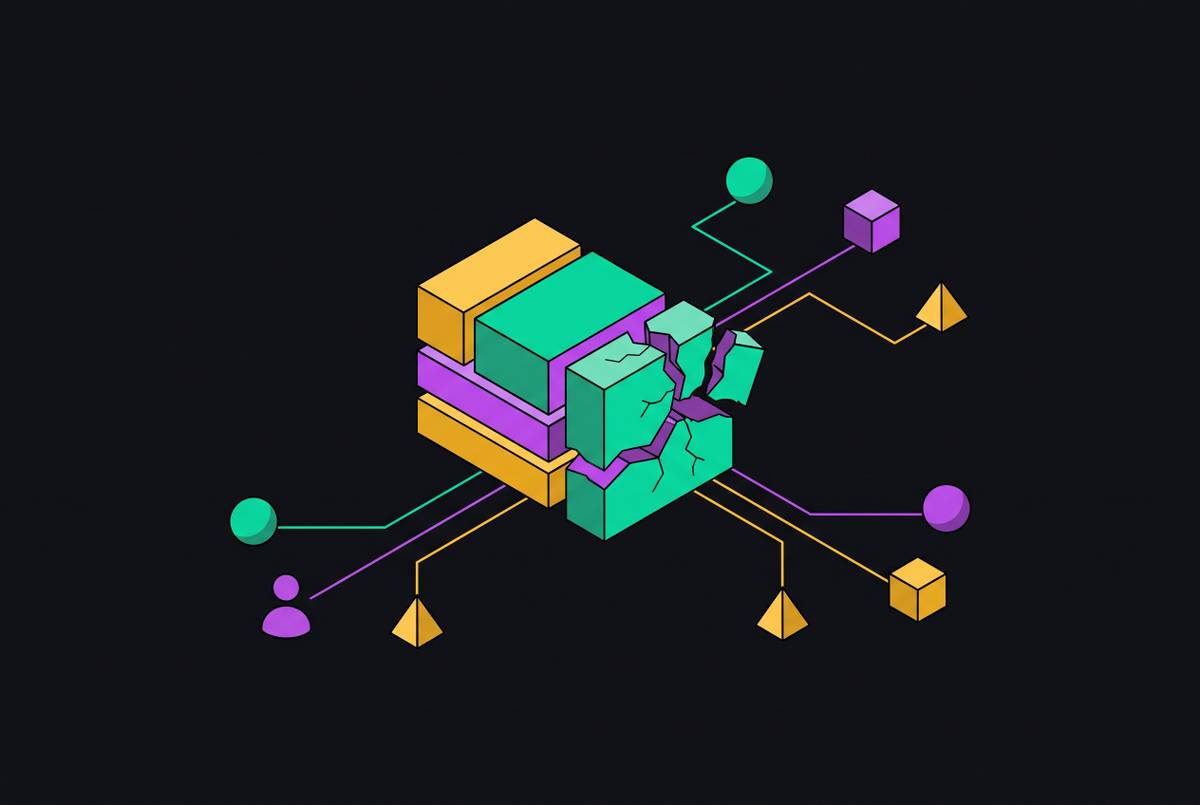
Why open source projects go quiet while still shipping
A repository can be active while its public changelog looks abandoned. Pull requests merge and releases ship, but people outside the engineering workflow see little of what has changed. When a project is small, a maintainer may remember enough to write release notes by hand. As more people contribute, keeping track of every pull request is too much work to do from memory.
Communication then becomes a separate reconstruction task, competing with the next release for attention. Even when someone completes it, the result often describes engineering activity and leaves its meaning for users unexplained. The project has shipped, but its readers still lack a useful signal. That distinction explains how real progress and perceived inactivity can coexist.
What silence actually costs: community trust, contributor momentum, and enterprise triage
For community users, a stale changelog can imply abandonment. Trust built over months erodes when visible progress stops, even if development continues elsewhere. Once users interpret silence as inactivity, a later announcement has to do more than describe a release. It also has to rebuild confidence in the project.
Contributors need a different signal, namely acknowledgment that their work landed and a clear sense of what comes next. Without it, people see a merged contribution as a lone technical change, with no clear link to how the project is moving forward. The consequence is a weaker connection between completed work and the next opportunity to contribute.
Enterprise and production users face a triage problem. They need to distinguish breaking changes, migration work, and patches relevant to service commitments before deciding how urgently to upgrade. Security notes make the cost of imprecision especially clear. A note that explains what a vulnerability patch addresses reduces uncertainty, while “security improvements” leaves room for speculation and panic. These audiences all need evidence of progress, but they cannot make their decisions from the same undifferentiated message.
The three-layer changelog: same commits, three different audiences
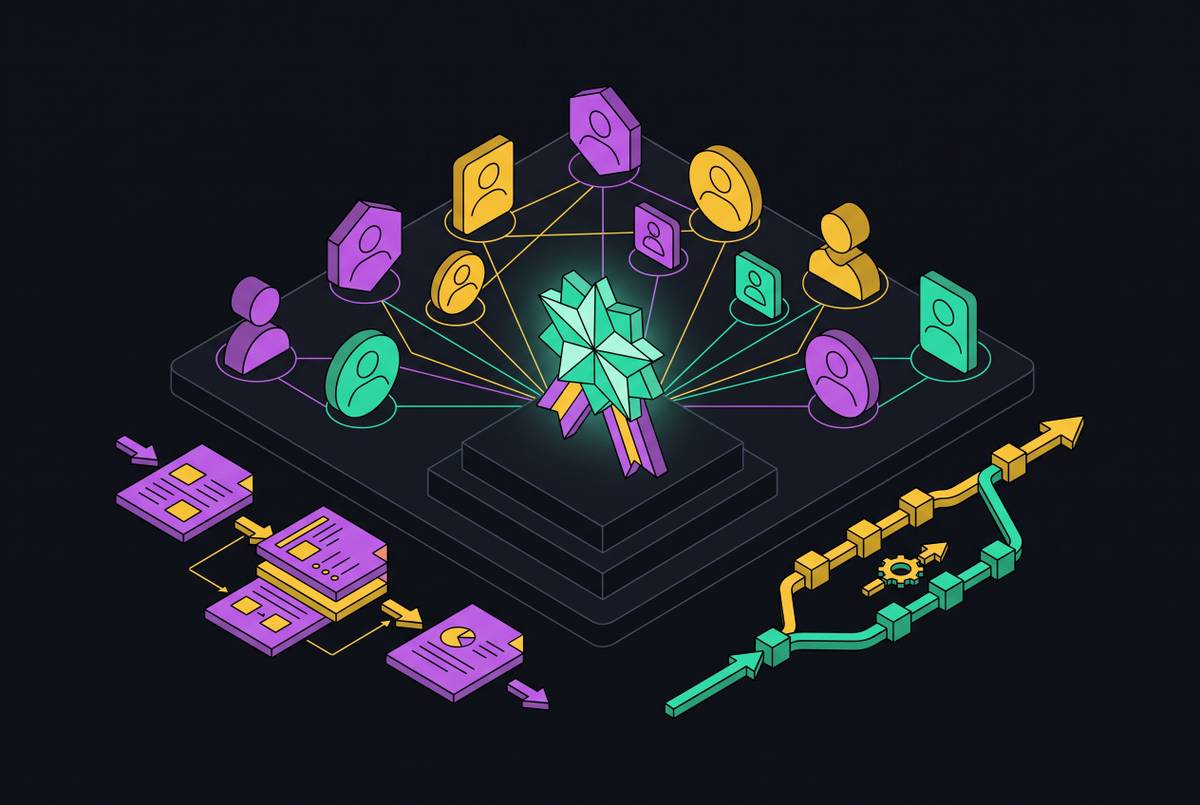
The same merged commits need three framings, each organized around a reader’s decision. The technical changelog gives engineers the detail needed to integrate or audit a change. It includes file paths, version hashes, and affected endpoints. It helps engineers trace a change back to its source.
The public changelog shows what users can do with those changes. Its central statement is “you can now do X”, because the reader needs to understand what changes if they upgrade. The newsletter or announcement goes one step further and explains impact through a statement such as “this means your workflow no longer requires Y”. That way of explaining the changes helps the broader community, including non-technical stakeholders and press.
Linear’s changelog shows how the public layer works, with entries that have dates, pictures, and plain language. Vercel’s near-daily changelog keeps entries short by describing what features do without making each entry a how-to guide. Both examples show that a useful public signal can be compact.
Plain language does not mean withholding technical detail from people who need it. Developer tools have users who expect precision, so version numbers, affected endpoints, code examples, and migration paths belong where they support an upgrade or integration decision. An entry such as “improved performance” offers too little to assess. The governing rule is to write for the user of that layer, rather than defaulting to the engineering team’s account of its own work.
Capturing the signal at the point of change, not at release time
Kubernetes makes release-note capture a condition of merging. Automated bots block pull requests that lack a release note entry, so the discipline does not depend on a maintainer remembering to ask later. The enforcement point matters because the author still knows what changed and why. A PR template records what the author knows before they have to recall it while getting a release ready.
This is the handoff on which the three-layer model depends. Engineers write down what they know while the change is still fresh, so editors have something concrete to work with for each audience. Requiring an entry in every PR template moves the work out of the release-time backlog. It preserves the information from which a finished announcement can be written.
Argo CD’s release process makes ownership and timing public through a schedule with Release Champions, Release Approvers, and repository issue-template checklists. Its v3.7 schedule lists RC1 for Tuesday, Dec. 15, 2026 and GA for Tuesday, Feb. 2, 2027, with Blake Pettersson as Release Champion. Its v3.6 schedule lists RC1 for Tuesday, Sep. 15, 2026 and GA for Tuesday, Nov. 3, 2026, with Eugene Doudine as Release Champion. The Release Approver fields for those two releases are blank. The schedule and checklists let people share the work of getting a release ready without relying on one person to remember it all.
For API-focused projects, the same capture principle extends to the specification repository. Monitoring merged pull requests and releases there catches the actual diffs. Narrative context can then be built on the specification change. It should not substitute for the underlying evidence.
Automating the pipeline from merged commit to drafted release note
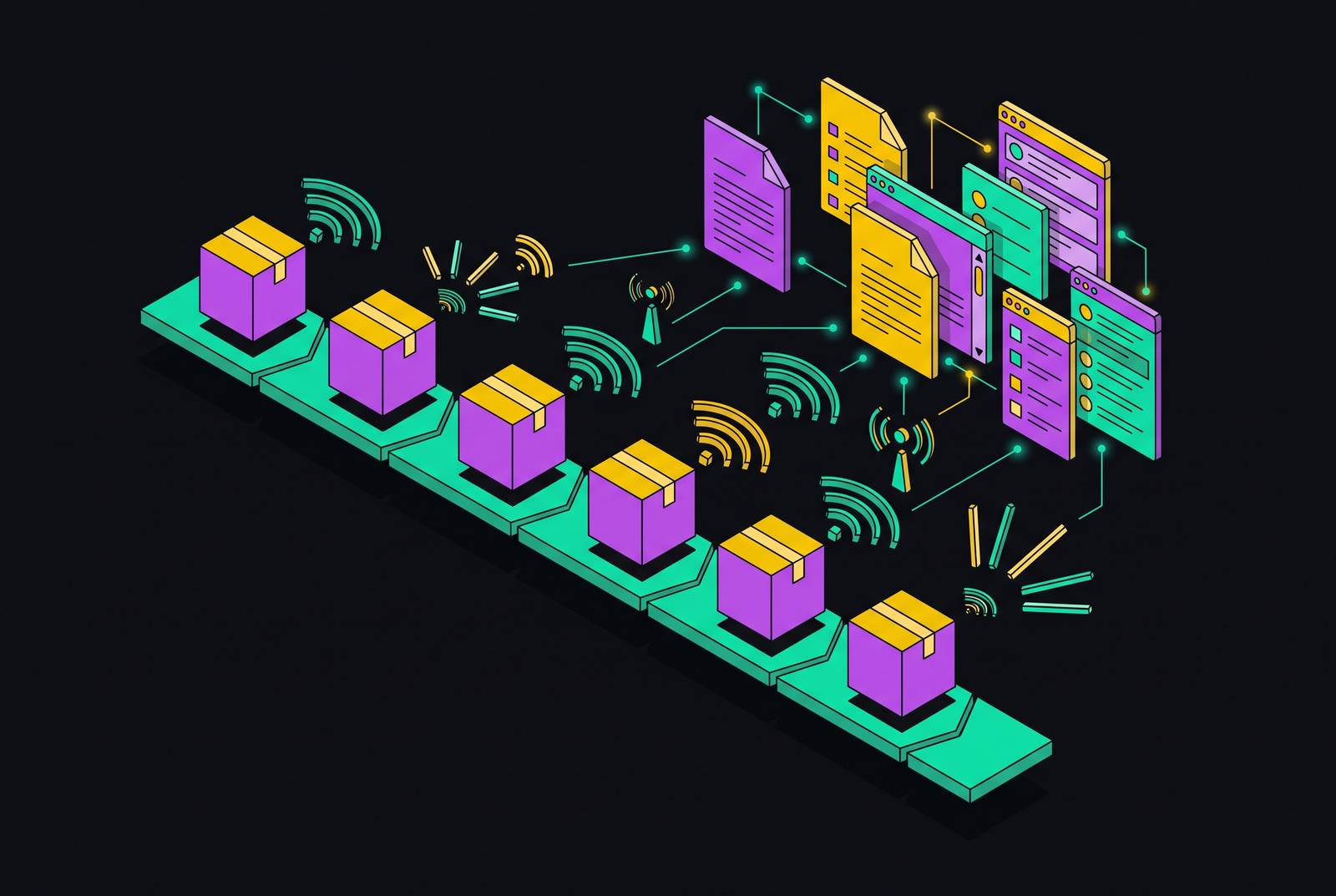
Once information is captured at the point of change, automation can move it into a draft. Tools including release-please, semantic-release, and git-cliff read structured commit messages and build changelogs from them. Someone still needs to cut what readers can skip, group related commits, and rewrite entries for the people who will read them.
The CI/CD pipeline supplies the source of truth for this production flow. Version control feeds a changelog generator, AI drafts a human-readable summary, and a distribution tool handles publication. The automated steps can take under a minute to do what would take hours to put together by hand. Editorial judgment requires time beyond that automated processing. The reliable pattern is AI-drafts-human-reviews, with a person checking accuracy and tone before publication.
For API projects, Bump makes the specification diff the starting point for release communication. When an API spec updates, it detects the diff, classifies changes as non-breaking or breaking, generates a human-readable changelog entry, and notifies subscribers. This removes a distinct reconstruction step because the change is already expressed in a form the platform can compare. A person still needs to check the draft when it must explain effects that the diff alone cannot show.
The objection to full automation is substantive. Replacing a content operation with AI-generated-and-published material without human review can erode audience trust, and quantity without quality does not serve a technical audience in 2026. Automation should remove blank-page friction and memory reconstruction. KaibanJS illustrates a separate use of automation by supporting workflows that repurpose one release-note source across X, LinkedIn, Discord, and blog. Formatting that source for several destinations is useful, but it does not resolve who needs which message.
Segmenting release communication by audience, not by channel
Distribution starts with the reader’s relationship to the project. Treating the entire audience as a single list again forces different readers to rely on one undifferentiated message after production has already separated the framings. A user, contributor, sponsor, and production operator may see the same announcement but need different things from it. The three-layer model supplies what to say, while segmentation decides which points to stress for each reader.
Regular users need releases, migration notes, and a sense of where the roadmap leads to decide whether to upgrade. Contributors need acknowledgment, good-next-issues, and project direction to connect completed work with future participation. Enterprise and production users need breaking change notices, migration checklists, and patches relevant to service commitments in a structured, scannable form. Readers in the broader community, including sponsors, can get an account of how the changes affect them without the full engineering record.
Breaking change notices deserve particularly precise treatment because the reader has an immediate operational reason to act. Their urgency should come from the change and its consequences. Supabase’s “Launch Weeks” demonstrate how audience-aware packaging can also support broader participation. By unveiling major features daily over a week, Supabase presented engineering work as a community event, a press moment, and a developer tutorial simultaneously. That approach helped grow a community of more than 430,000 developers without requiring every audience to engage with the work in the same way.
Building the rhythm: from one-time fix to continuous communication
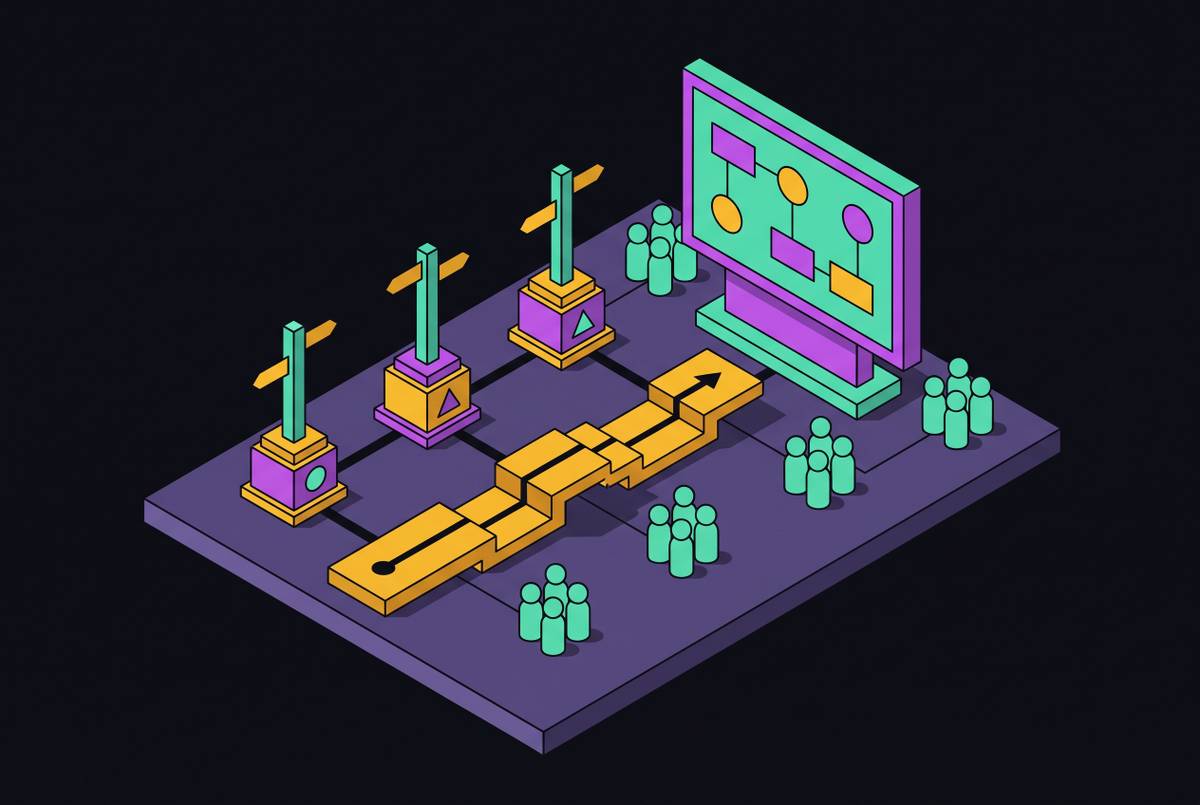
A sustainable rhythm connects communication to ongoing work rather than treating publication as a sequence of special events. Every merge or tag feeds a pipeline that remains ready to produce a readable signal. Recording changes early gets the facts down, automation drafts the text, people check that it is right, and writing for each audience makes it useful to them. Together, these steps prevent the blank page and the backlog of undocumented changes.
Weekly or bi-weekly releases work well for most projects because each release creates a structured opportunity to show progress and recognize contributors. Zed Editor’s weekly stable release cadence was established well before March 2026 and predates its 1.0 release in April 2026. When users know the schedule, they know when to check without being reminded that the project is moving forward.
Projects with irregular releases can maintain the same continuity through a consistent monthly community update. Its recurring content covers what shipped, what is coming, who contributed, and one interesting technical note. Keeping that shape consistent makes the update recognizable without forcing the engineering work into an artificial release schedule.
OpenTofu and Valkey show why cadence and transparency matter beyond individual announcements. OpenTofu reached millions of downloads, while Valkey attracted a large contributor community and millions of Docker pulls. These community forks competed directly with corporate incumbents while meeting community expectations for visible progress. Communication makes the project’s quality legible over time. When an editorial calendar has to invent occasions to publish, it is a symptom of a missing system. A continuous pipeline lets the work generate the schedule.
Where spec monitoring and AI answer engines are changing what "publishing" means
That rhythm has value beyond the people who already follow a project. Specification-level monitoring is becoming a content channel, while AI answer engines are changing how technical information is discovered. Both shifts reward writing that sticks closely to what has changed. They extend the case for continuous publishing without changing its foundation in accuracy and reader usefulness.
Some specification projects have failing machine-readable feeds or blog feeds that return errors. So watching only official announcements can miss what merged pull requests, releases, milestone boards, and discussions still show. Watching the repository puts the change first, with an explanation built around it. Projects that turn their own spec changes into readable content create a channel that announcement-only monitoring can miss.
GitHub Copilot relies on code context and trained models for its answers, while citation in an AI overview represents a form of visibility that traditional page ranking does not fully capture. Linear’s changelog ranks for long-tail product-feature queries through entries that are dated, precise, and written in plain language. Those properties also make technical content easier for a model to interpret, though they do not guarantee citation.
The first duty is still to help readers decide whether to upgrade, contribute, or look into a change. Doing that each time also builds a body of precise technical content with dates and named sources. Each change that matters gets a lasting explanation that keeps it from being lost in repository history. Continuous publishing therefore compounds the value of the work, making progress readable now and discoverable over time.