Replacing the Editorial Calendar With Event-Driven Publishing
Event-driven publishing ties content to real engineering work instead of guessing months ahead.
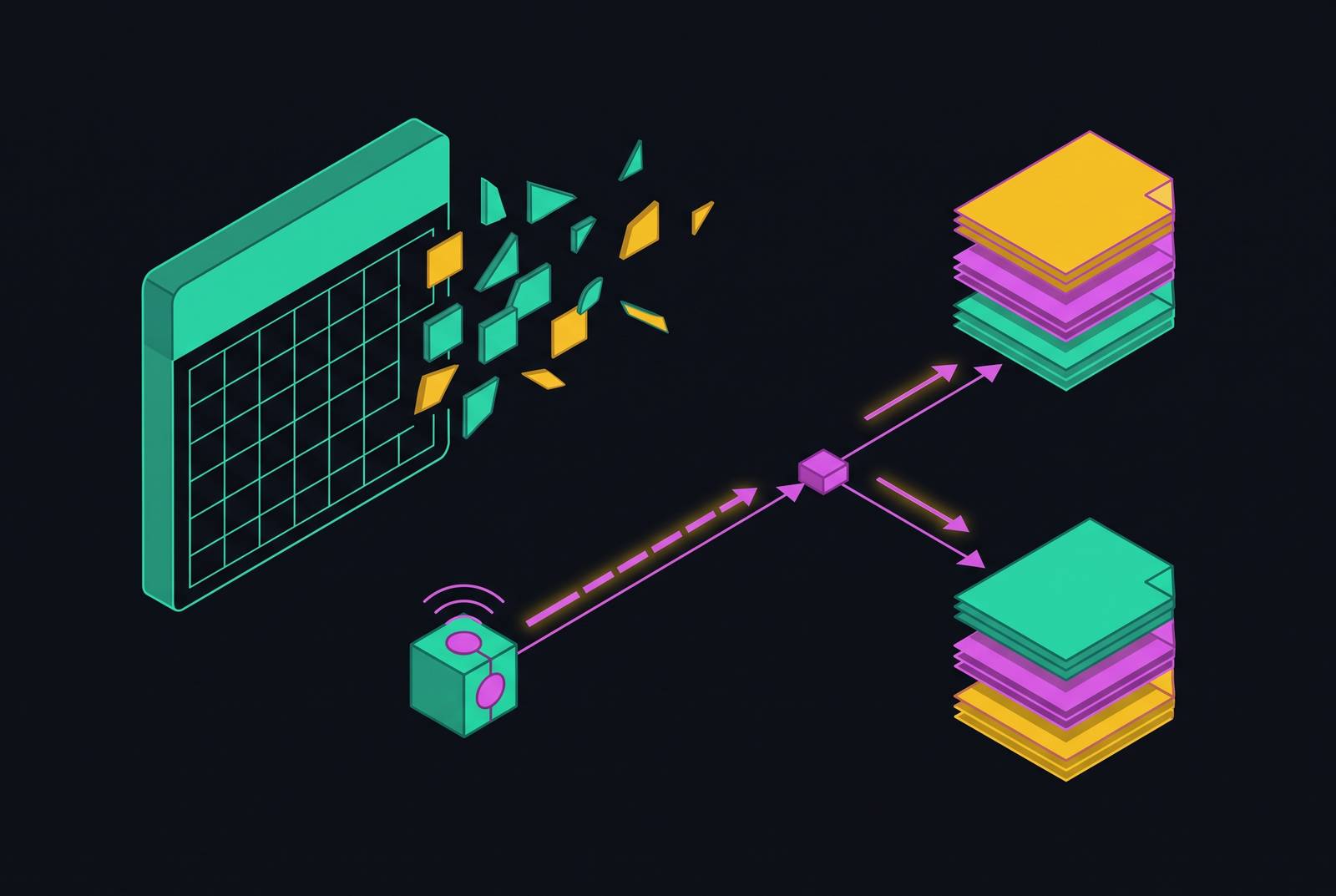
A team that ships code every two weeks often publishes a blog post once a month, on a topic someone picked in January. That mismatch is the subject of this piece: the editorial calendar is a workaround for a missing connection between the work a team does and the story it tells, and event-driven publishing closes that gap by making the engineering event itself the brief. Calendar-first planning asks someone to guess, months ahead, what will be worth saying once the date arrives, and that guess is wrong often enough that the habit should be questioned. The calendar has no window into the actual work, so it fills its slots with topics instead of events, and that is a structural problem, not a discipline problem. For a developer-tool company, the mismatch is sharper still: commits land, releases ship, specs change, and the content calendar keeps running on a schedule set before any of that happened. Content locked to the calendar ends up late, a post about a feature that shipped three weeks earlier, or generic, a topic locked in before anyone knew what would actually ship.
What engineering teams produce that content teams ignore
Every software team generates a steady stream of dated, verifiable events with built-in authority, and most content teams never build a pipeline to use them. Merged pull requests, versioned releases, API spec changes, dependency upgrades, regulatory updates that touch the product's domain: each one is concrete, each one is dateable, and each one explains itself. A good event comes with a timestamp, a scope, and a reason for existing, which is more than most content briefs manage to supply. The changelog makes the point clearest. It is a record of every meaningful change, written at the moment the change happens, by the people who made it, not reconstructed weeks later by someone reading a roadmap. Teams that keep their changelogs accurate and current also tend to write clear commit messages, review pull requests carefully, and flag breaking changes before they land. A changelog done well says something about how the team works, not just what it shipped. And a public changelog compounds: it builds traffic over time, earns trust with the people reading it, and drives adoption of features that would otherwise go unnoticed, which makes it one of the more undervalued assets a developer-tool company owns. API and spec changes work the same way. When a spec changes, the people depending on it need to know right away, and the change itself already contains what a writer needs: what moved, what broke, what to do about it. Developer marketing is moving toward deeper technical credibility, and audiences that expect accuracy and depth get both, by default, from content tied to a real engineering event.
How the change becomes the brief
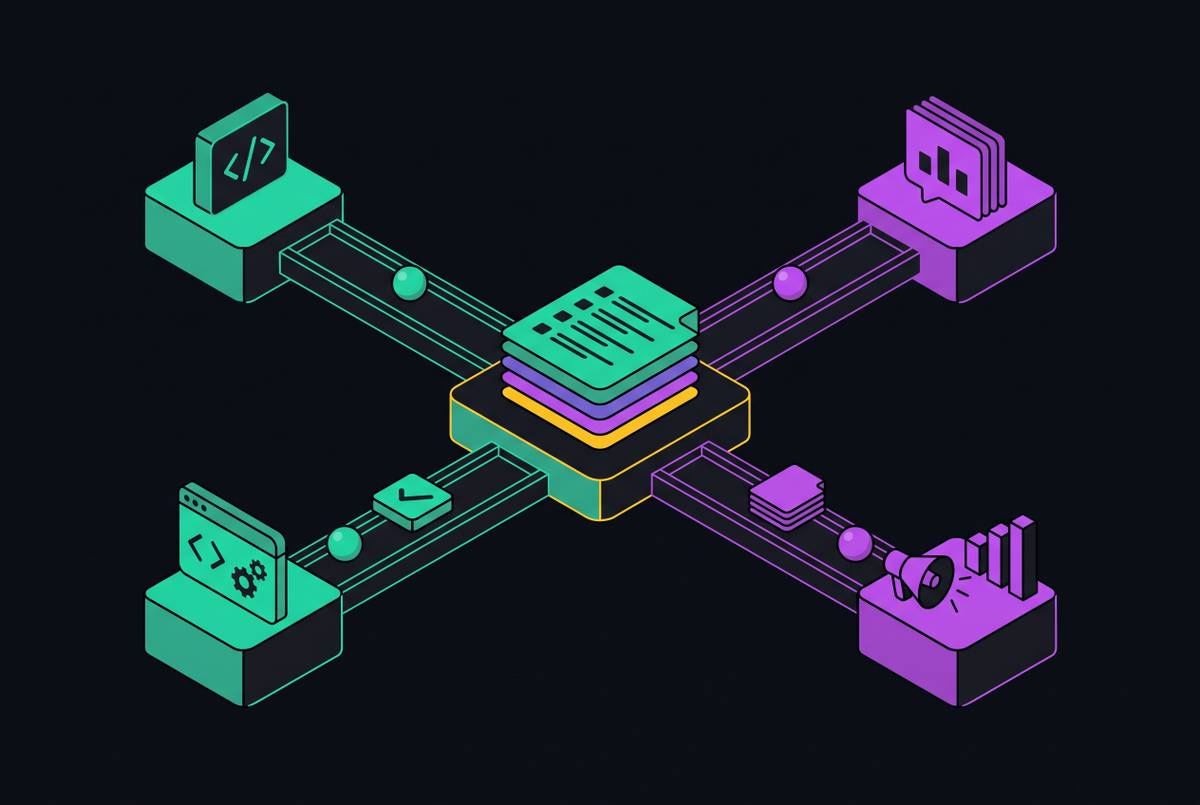
Once the event is the brief, the hardest part of making content, deciding what to write about and why it matters right now, is already finished. A standard brief asks someone to invent a topic, argue that it matters, guess at the audience, and put it on a schedule, all before a word gets written. An event skips that entirely: the topic is the change, the relevance is that it just happened, and the audience is everyone it affects. Scoping from an event works in three layers. The technical layer covers what changed exactly: the diff, the spec delta, the new endpoint, the field that got deprecated. The user layer covers what that change means for someone relying on the product: what they now have to do, what they can now do that they couldn't before. The context layer covers why the change happened at all: the problem it solves, the tradeoff it settles, the outside force, a regulatory update, an upstream spec release, that made it necessary. These three layers also sort audiences out of a single source: a technical changelog for developers wiring into the API, a plainer changelog for everyday users, and a changelog newsletter for distribution, each one scoped differently from the same triggering event.
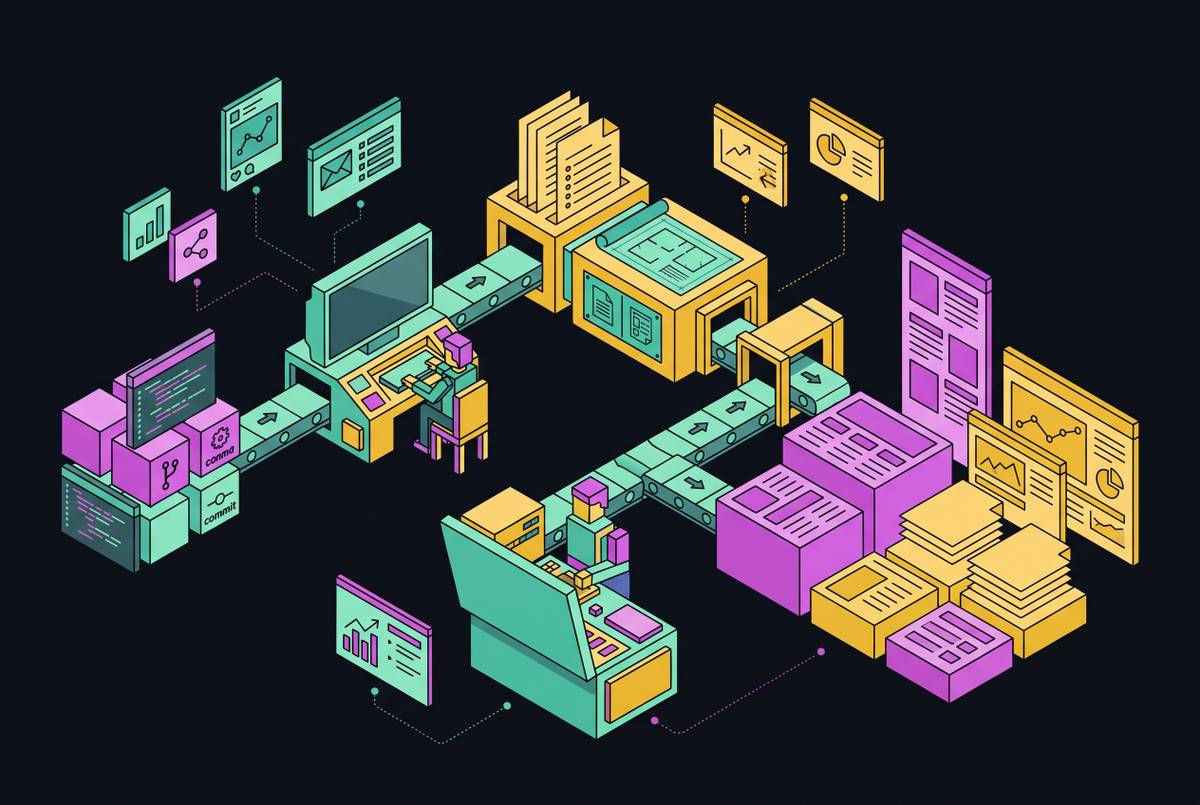
Matt Palmer, former Head of Developer Relations at Replit, ran this as an actual pipeline. His team shipped 52 consecutive weekly changelogs, with the later stretch built on the Claude Agent SDK after starting on a cruder chained-prompt setup. The system filtered feat: and fix: commits every week, pulled in Slack updates as raw material, and had AI draft plain-language, user-facing rewrites straight from that commit context. The editor's job was never a blank page. It was story and tone work on a draft that already had the facts in it.
Content generated from events outperforms content generated from calendars
Content built from a real engineering event is more accurate and more credible than content planned months ahead, because the event limits what can be claimed about it. On accuracy: a post written from a merged pull request can't misrepresent what shipped, because the pull request is the record of what shipped. A post planned two months out and written from memory or a roadmap slide has no such limit, and it shows. On timeliness: the gap between an event and the post about it can run hours or days, while the gap between a calendar slot and the event it was meant to cover often runs weeks or months, and sometimes the event never happens. On credibility: developer audiences are quick to spot marketing that sounds like marketing. Content that opens with a real engineering event, names the commit, links the pull request, and describes the actual change reads as coming from the people who built the thing, not from a brand exercise built around it. A developer can check event-driven content against the repo itself; there's nothing to check a thought-leadership post against.
This approach draws a common objection: that it produces a stream of release notes instead of a real narrative, and that objection deserves a direct answer. The context layer explains why the change happened and what problem it solves, turning a release note into a story: the event supplies the hook, and the writer supplies the argument built on top of it. For open-source teams the same logic runs even stronger, since credibility there means showing the work directly: sample repos, a visible changelog, real integrations documented as they happen. A screenshot of a working integration beats a polished explainer video, because the screenshot can be checked and the video can't.
Running this as a pipeline rather than a one-off practice
Event-driven publishing only replaces the calendar if it runs on its own, without someone manually sorting through every commit, because otherwise it's just a more exhausting version of publishing whenever something comes up. The first requirement is filtering signal from noise: not every commit, pull request, or dependency bump deserves a post. A dependency bump or a typo fix is not a publishing event; a new API endpoint, a breaking change, or a spec delta that touches integrators is. Teams already using conventional commit prefixes like feat: and fix: have a first-pass filter sitting in their workflow already, with no new tooling required.
The second requirement is a draft-to-publish workflow that doesn't quietly rebuild the bottlenecks of the old calendar system. Two modes fit different teams. In suggest mode, the system drafts a post and a human signs off on the headline and the substance before it goes live, which suits teams that want editorial judgment on every piece. In autopilot mode, the whole chain from signal to published post runs without anyone stepping in, which suits teams publishing daily or close to it, where reviewing every post by hand just isn't realistic.
The worry about AI-generated content sounding generic is legitimate, but the fix belongs at the system level, not in cleverer prompts. Language models tend toward the statistical average of their training data. That is why so much AI-assisted content from different companies ends up sounding alike. The fix is a workflow with brand voice rules built into it, a guardrail layer that holds the tone steady and strips out the clichés, rather than rewriting the prompt every time the output feels off. The Replit pipeline built this in directly: the AI wrote its drafts with the human editor as the actual audience, including internal context and links to the Slack threads behind a change, so the editor was doing story and tone work on a draft that already had the facts straight, not fact-checking from zero. Some content should stay human-led no matter how good the pipeline gets: founder letters, customer stories, opinion pieces, and anything written during a crisis draw their value from judgment and accountability that no pipeline can stand in for.
Coding agents fit naturally into this kind of content work because the work itself resembles code work: it plugs into GitHub, CI pipelines, and API monitoring the same way engineering tools already do, running on infrastructure the engineering team has already built. Marketing teams built around engineers are increasingly setting up exactly this kind of system, handing the repetitive, structural work to automation and keeping the judgment calls for people.
Spec and regulatory events as publishing triggers most teams miss
The most overlooked publishing triggers come from outside the team's own codebase. They're the external spec and regulatory changes that directly affect the people building on top of the product. When an upstream spec releases a new version, every team implementing that spec has a publishing event on its hands: their users need to know what changed, what it means for their integration, and what the team plans to do about it. The Arazzo Specification v1.1.0 release in May 2026 is a clean example: it added AsyncAPI support, letting Arazzo workflows describe sequences of calls that span both synchronous and asynchronous APIs for the first time. That's a dated, specific event, and it gave every team building on OpenAPI or AsyncAPI a real reason to publish something. API Evangelist Kin Lane has made this point directly: a new specification leads straight to documentation, schema work, blog posts, and a social post, because the spec release itself is the brief.
Regulatory change works on the same logic. A new data privacy rule, a compliance deadline, a shift in an industry standard: each one is a publishing event for every product operating in that space. These external triggers often carry more intent than an internal release note does, because a developer researching how a spec change hits their stack is already in problem-solving mode, and the team that publishes first with accurate, specific guidance earns trust that outlasts the moment. That trust matters because technical documentation is the most used developer learning resource, with nearly 68% of developers relying on it in the past year, and a post published right as a spec or regulation changes lands exactly when that need is highest, something a calendar-planned post can't replicate by design. Watching for these external events takes the same kind of infrastructure as watching internal ones. The source is an upstream spec repository or a regulatory feed.
How lean teams make this work without adding headcount
Event-driven publishing is faster than the calendar model and cheaper, because it replaces coordination overhead with automation. The Replit case makes the point: 52 consecutive weekly changelogs, run on the Claude API, at a cost well under a dollar per changelog, a setup that produced reliable weekly output at a fraction of what the equivalent labor would cost. For early-stage teams, the staffing model that pairs well with this kind of automation is a junior, highly organized developer marketer whose job is coordination: routing drafts, keeping engineering content moving, and getting founders onto podcasts and in front of meetups. Founders and engineers write the first draft of the material; the coordinator routes it and gets it published. Automation runs the pipeline, and the human makes the calls that need judgment.
The coordination overhead that automation removes is not small. Manually managing writers, briefs, approvals, and scheduling eats a real share of a small marketing team's week, time that compounds against a team also trying to keep pace with a shipping schedule that doesn't slow down for anyone. Teams running automated pipelines publish noticeably more than teams relying on manual coordination, and the gain comes from removing the bottleneck between the event and the published post, not from somehow having more ideas. None of this requires one giant platform. A handful of small, connected pieces, a commit filter, a draft generator, a brand voice layer, a publish step, are easier to build, easier to maintain, and easier to change than a single all-in-one system trying to do everything at once.
Moving from calendar to event-driven publishing
Moving off the calendar doesn't require rebuilding everything at once. It requires one reliable signal source and one pipeline loop that actually works end to end. Start with an audit of what the team already produces that carries publishing value: merged pull requests, release tags, changes to the specs the product implements. Most teams find they have more publishable events in a single week than they've published posts in the last month. From there, pick one event type and set a clear threshold for what counts: which commit types should trigger a draft, and which are just noise. Conventional commit prefixes like feat: and fix: are a practical place to start, since they require no new tooling for a team that already uses them. Last, choose a mode to run it in: suggest, where a human signs off before anything publishes, or autopilot, where the pipeline runs start to finish on its own. High-cadence teams publishing daily or close to it need autopilot to keep up, while lower-cadence teams can start in suggest mode and build confidence in the output before removing the approval step.
The hard part of this shift was giving up the false comfort of a content plan in exchange for the real, if less tidy, certainty of publishing when something actually happens. Teams that make the switch tend to find that the work gets better before it gets more frequent, because every post now exists for an actual reason. The calendar can shrink to a thin layer of context, conference timing, seasonal moments, known regulatory deadlines, sitting on top of an event-driven baseline that runs the show.