Toolchain Integration for Automated Developer Content
Automate changelog publishing by connecting commits directly to content pipelines.
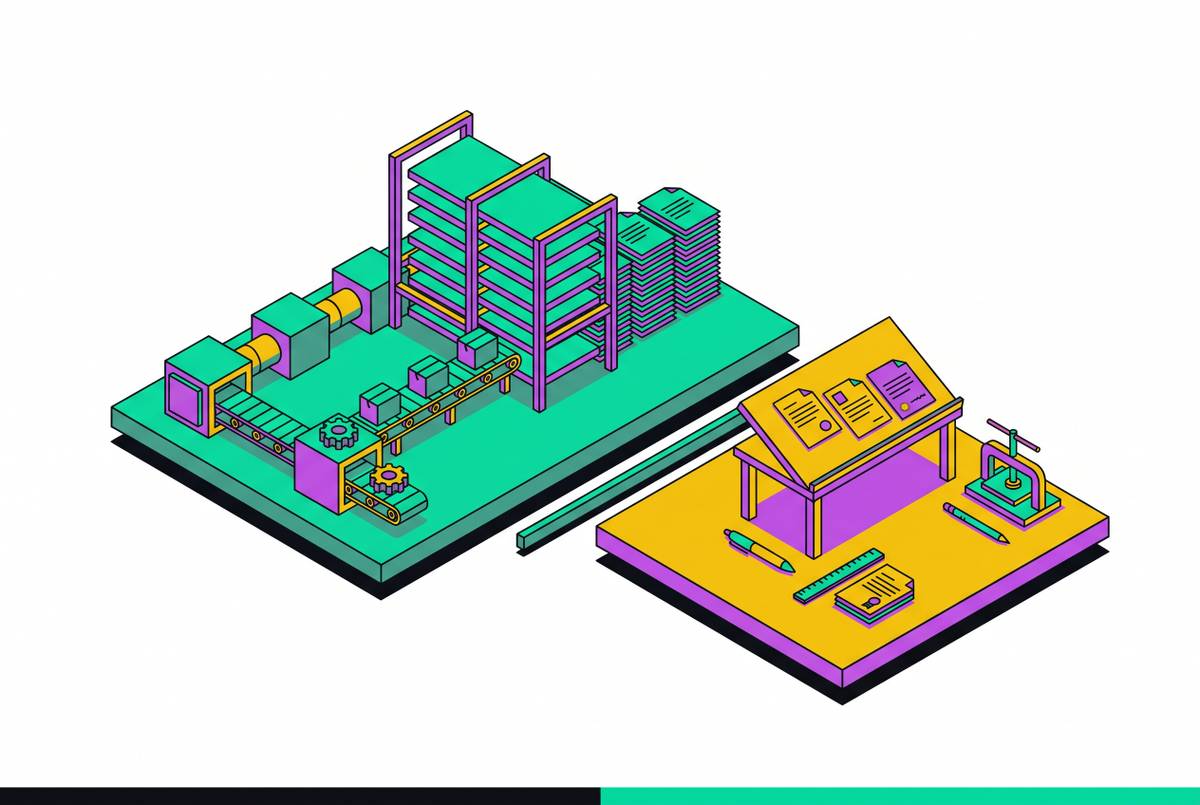
Developer-tool teams ship code every day, but they publish about it once a month, if that. The editorial process most teams run was built for a world where writing starts with a blank page or a brief, a structural mismatch with a deploy pipeline that moves continuously. A blank page and a commit operate on incompatible clocks by design, and no amount of discipline closes that gap because the two processes were never meant to run at the same speed.
An editorial calendar is the usual patch for this mismatch, imposing a scheduling rhythm on a team whose underlying work runs on no fixed rhythm. A calendar says publish on Tuesday regardless. The fix is not a better calendar. The signal a publishing team needs already exists inside the engineering workflow: merged pull requests, release tags, spec diffs. Every one of these is already timestamped, already attributed to a person, and already scoped to a specific change. What's missing is a direct connection between that signal and a publishing pipeline that acts on it without someone manually translating it into a brief first.
The three publishing surfaces a single commit can feed
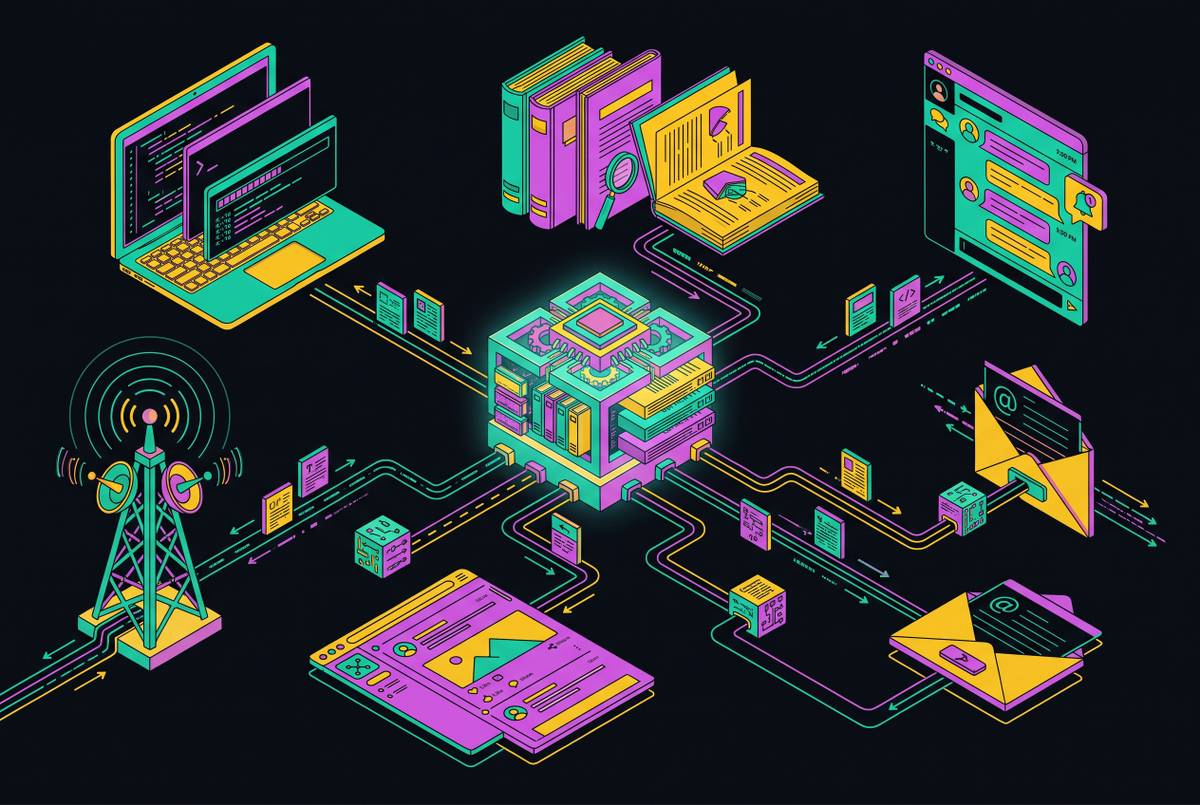
A mature changelog operation takes one engineering artifact and gets three separate outputs from it, each built for a different reader, with no additional research and no new editorial brief for each one.
The first layer is the technical changelog, written for developers integrating with the API, for contributors, and for technical evaluators sizing up the product. The second layer is the public changelog: it's for existing users driving adoption, prospects sizing up how fast the product is moving, and search engines picking up long-tail queries. The third layer is the changelog newsletter: a weekly email that summarizes the week's changes in three to seven bullets of user-visible updates, closed out with one paragraph of commentary from a founder or maintainer.
All three draw from the same source, the underlying commits, but each one frames that source differently. Resend's changelog is leaner and less polished, but it posts multiple times a week and the entries read as honest rather than padded, which proves the pattern doesn't require a design team behind it to compound into something valuable over time.
This is just documentation dressed up as content, not marketing. But the public changelog URL also works as distributable content on X, LinkedIn, and email, and internal linking turns the changelog into a node graph that connects to the rest of the content surface. It serves a prospect evaluating the product's momentum just as much as it serves a customer already using it.
What makes a signal worth acting on
Not every engineering event deserves a piece of content built around it, and treating every commit as equally publishable is the failure mode that produces low-quality output fast, eroding developer trust faster than saying nothing at all would have.
A dependency bump or a typo fix is noise. The test is whether the change moves the product's positioning in a way a developer needs to know about. A new attribution window option added to a Conversions API is a migration decision for every developer who already has one configured, putting it in a different category.
Two scheduled sunset dates are confirmed on its migrations page: version 202510 sunsets October 15, 2026, and version 202511 sunsets November 16, 2026. Deadline-driven events like these rank among the highest-signal triggers a content pipeline can act on, because inaction carries a direct cost for the reader, not just an abstract one. The same September 2026 changelog entry lists new Company Intelligence filters, a new DMA pivot in Ads Reporting, new hashedFirstName and hashedLastName fields in the Conversions API, and the new 180-day attribution window option, exactly the kind of addition that warrants a migration-focused piece.
The classification splits cleanly in practice. And this discipline doesn't stop at a team's own API. Monitoring a third-party spec matters as much as monitoring an internal one, because a breaking change in an upstream API is both a content opportunity, in the form of a migration guide, and a trust signal: catching it before it catches a developer's users.
The scoring criteria have to be defined before any of that tooling gets wired up, or the pipeline will produce noise at scale.
The integration points that connect engineering events to published content
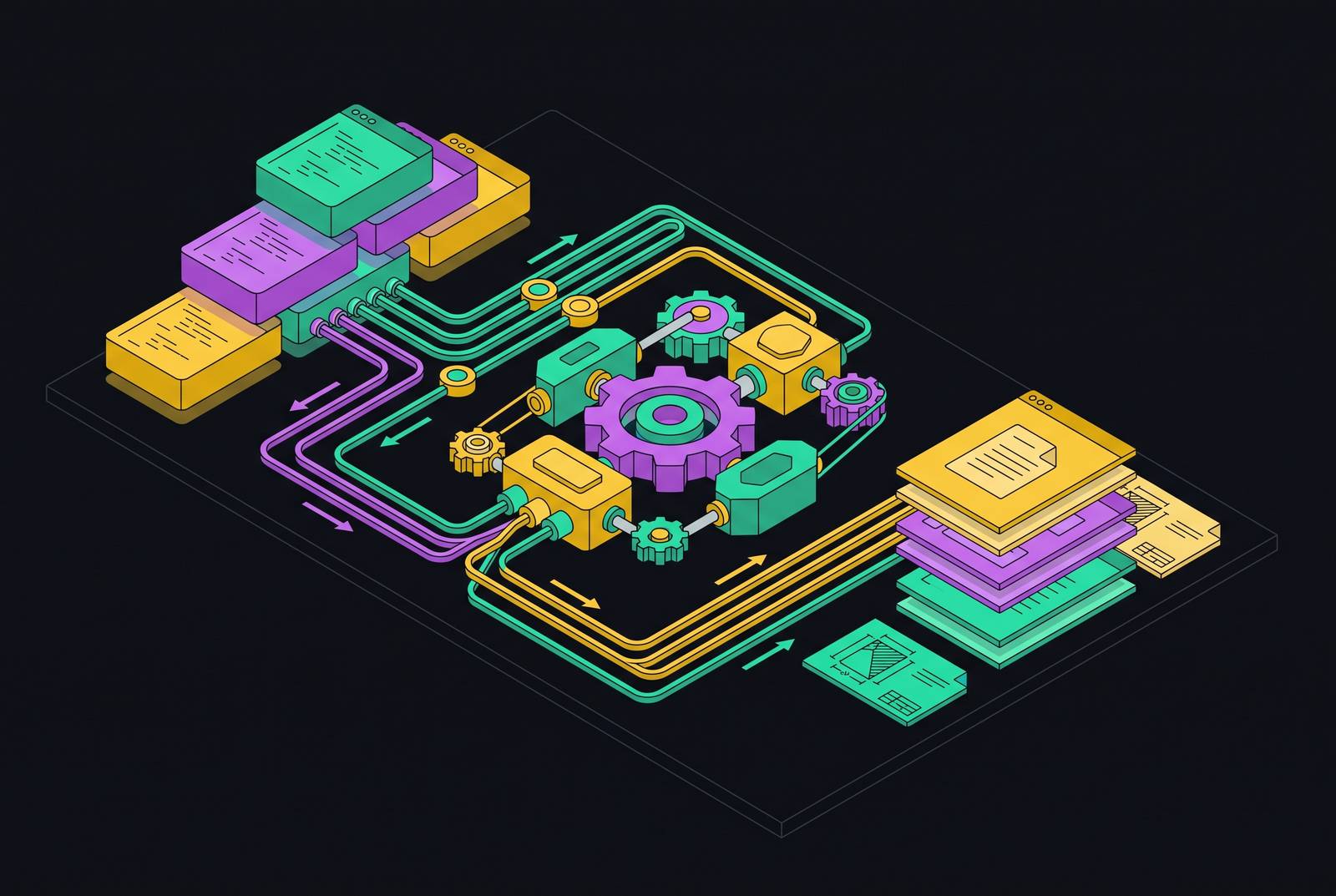
The pipeline runs through five integration points, and each one can be wired on its own or chained into the next: signal capture, classification and scoring, draft generation, a review gate, and CMS publish with the triggers that fire after it.
Signal capture is the entry point, built on a webhook or a polling integration sitting on top of the engineering artifact itself, whether that's a merged PR event, a new release tag, a spec diff caught by a monitoring tool, or a changelog entry published by an upstream provider. The open-source tool oasdiff detects 755 distinct kinds of changes across every part of an OpenAPI spec, breaking and non-breaking alike, and it covers nearly every way a modification to an API can affect a client already built against it. It's built to run in CI against a team's own spec. For most teams, you want a spec diffing tool in CI for owned APIs paired with a continuous monitoring tool for upstream dependencies.
Classification and scoring is the filtering step, where the captured signal gets checked against the product's positioning before a draft ever gets triggered. This is the stage that protects a lean team's time, and it works best as explicit rules rather than judgment calls made fresh each time: does the change touch a user-visible capability, a developer integration point, a deadline, or a deprecation? A yes triggers a draft. A no gets logged and dismissed.
Draft generation turns the classified signal into the brief itself. The commit message, the spec diff, the release tag, and the classification label all pass through as structured context into whatever generates the draft. Content grounded in a real engineering event comes out sharper than content started from an open prompt, because the scope, the audience, and the facts are all already fixed before a word gets written. An orchestration layer, such as the fair-code, self-hostable tool n8n, can connect the signal source to the generation step, and it can route the draft through a brand-voice filter before it ever reaches a human reviewer.
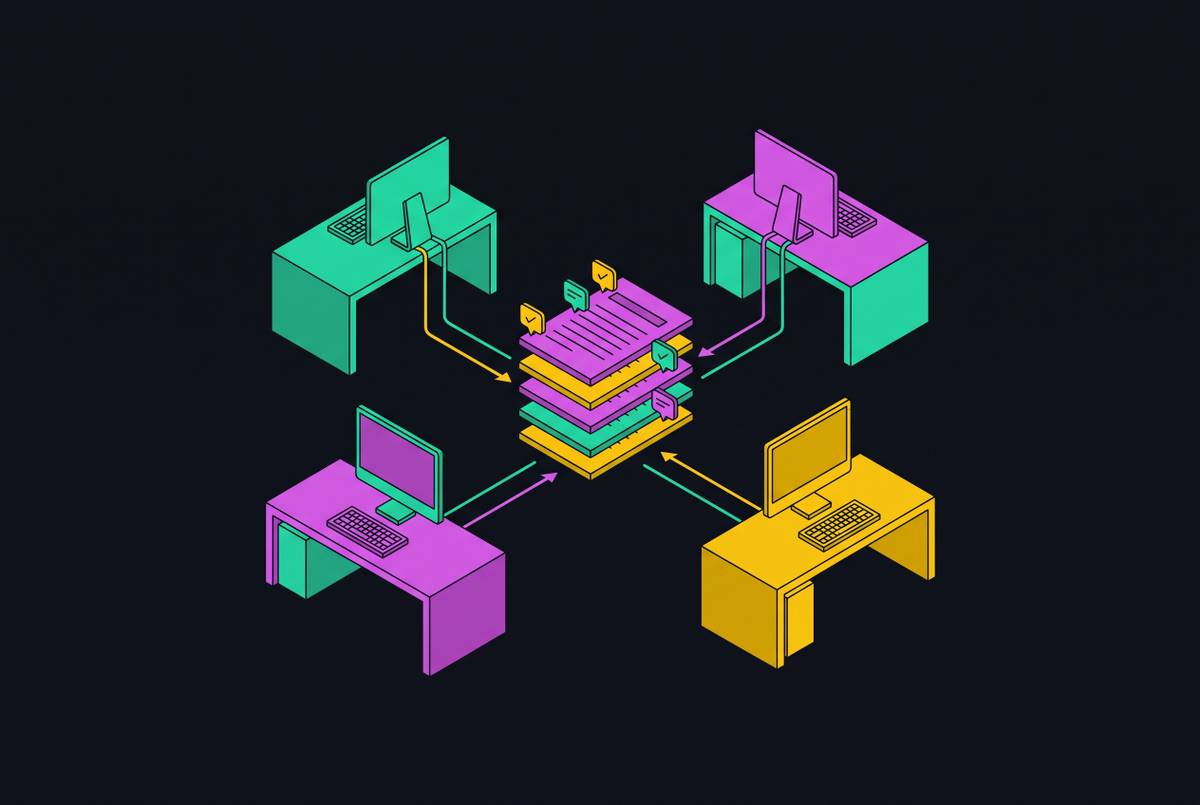
The review gate offers two modes. The gate is the mechanism that builds confidence in the rest of the pipeline before a team moves toward running it unattended.
CMS publish with downstream triggers closes the loop. Once content publishes, the CMS layer can kick off automated build and deploy pipelines on its own, a headless or Jamstack site rebuilding and going live without a developer manually stepping in, the way Contentful's webhook-triggered build pipeline works. A unified publishing layer treats content as one canonical payload and compiles it into platform-specific requests through adapters, giving the team one internal schema, one scheduling surface, one audit trail, and one webhook stream tracking status changes. Status webhooks from the CMS confirm the post went live and log it, so the system that triggered the draft in the first place knows it landed.
Brand voice as a pipeline problem
Engineering-led content automation produces generic output when no voice system is built into the pipeline, because the model is only following generic instructions.
Developer audiences notice generic output fast, and as AI makes content easier to produce in bulk, genuine expertise becomes harder to fake and more valuable to demonstrate. Developers can tell real expertise from AI-generated filler, and getting that distinction wrong costs trust that compounds over time. The mistake teams keep making is responding to that trust gap by leaning harder on AI-generated copy.
The fix sits upstream, in a structured voice system defined before the pipeline ever runs. That means three to five traits defined alongside their failure modes (witty, never snarky), explicit do's and don'ts, a list of banned phrases, and a guide specific enough that someone could actually disagree with a line in it. That guide, along with real examples, gets fed to the model as structured context on every single run, not bolted on after the fact when the output starts sounding wrong. As content operations scale, prompts get edited inconsistently across team members and quality drifts between them. Version control and performance tracking applied to the prompts themselves, the same discipline engineering teams already apply to code, is the answer to that drift.
Content grounded in a real engineering event has a built-in authenticity advantage over content started from an open prompt. A commit, a spec diff, a release tag are facts, so grounding a draft in those artifacts functions as a voice mechanism on its own, before a single word of style guidance gets applied. The objection that automation produces slop holds for pipelines that skip the voice system. It doesn't hold for pipelines that treat voice as a first-class engineering constraint, versioned and tested the same way any other system component would be. Open-source teams carry a particular advantage here: a release story can pull from the community layer itself, git history, contributor conversations, issue threads, producing content that reads as specific because it's sourced from real conversations between real builders, not manufactured from scratch.
Documentation and content serving two audiences in 2026
Every piece of content the pipeline produces now gets read twice: once by the developer who finds it directly, and once by the AI assistant that answers that developer's question by citing it, and each of those two readers needs something structurally different from the text.
Developer marketing research from 2026 confirms documentation now serves two audiences at once: the human developer reading it directly, and the AI assistant answering a developer's question by drawing from it. That changes what counts as well-written for a changelog entry or a migration guide. Content that's machine-readable as well as human-readable, structured, factual, cited, built from named specifics instead of adjectives, is the format that earns citations from AI assistants and satisfies the developer reading it directly at the same time. The two requirements turn out to be the same requirement.
The pipeline architecture described above produces content that meets this standard naturally when the voice system is configured correctly, because the brief comes from a real event, the draft is grounded in facts, and the output stays specific. Developer adoption research names keeping documentation accurate and current as a top challenge, and a significant share of developer adoption practitioners surveyed say so. A changelog sourced from commits and published continuously solves this directly, because the documentation updates the moment the product does, instead of waiting on a separate editorial schedule to catch up.
The practical implication for pipeline design is that output format carries as much weight as the content itself. Structured entries with explicit dates, named capabilities, and links back to the underlying PRs and docs are usable by both readers at once. A vague feature announcement serves neither one.
Running the pipeline with a lean team
The full pipeline, from engineering signal to published content, is realistic to run with one or two people on the team, provided every stage gets treated as a system component instead of a manual task someone has to remember to do.
The sequence runs in order: a commit or spec change triggers a webhook, an orchestration layer classifies the change against the team's scoring rules, draft generation runs with structured voice context attached, a review gate either routes to a human for approval in Suggest mode or publishes directly in Autopilot mode, the CMS publishes and triggers a site rebuild, and a status webhook closes the loop back to the system that started it. Editorial judgment gets applied once, at the single point where a human reads and approves or edits a draft, instead of getting spread across research, briefing, drafting, and formatting the way a traditional workflow spreads it.
A full changelog operation run this way costs approximately 30 minutes a week of a founder's time. Suggest mode, where a human approves the headline before anything publishes, is the right place to start for a team still building confidence in its voice system and its scoring rules. Once those two components have been tested and proven out, you can turn on Autopilot mode, where signal moves straight to a published post without anyone touching it.
Developer-tool teams already think about deploying from their repos as something continuous, without ceremony attached to it. Publishing from those same repos deserves the same treatment. That reframes the whole exercise: the pipeline is an infrastructure project, built to be instrumented, measured, and changed on evidence the same way any other system a team runs gets changed.