Notion as a Content Signal Source for Engineering Teams
API updates now let engineers' Notion work become automatic publishing triggers.
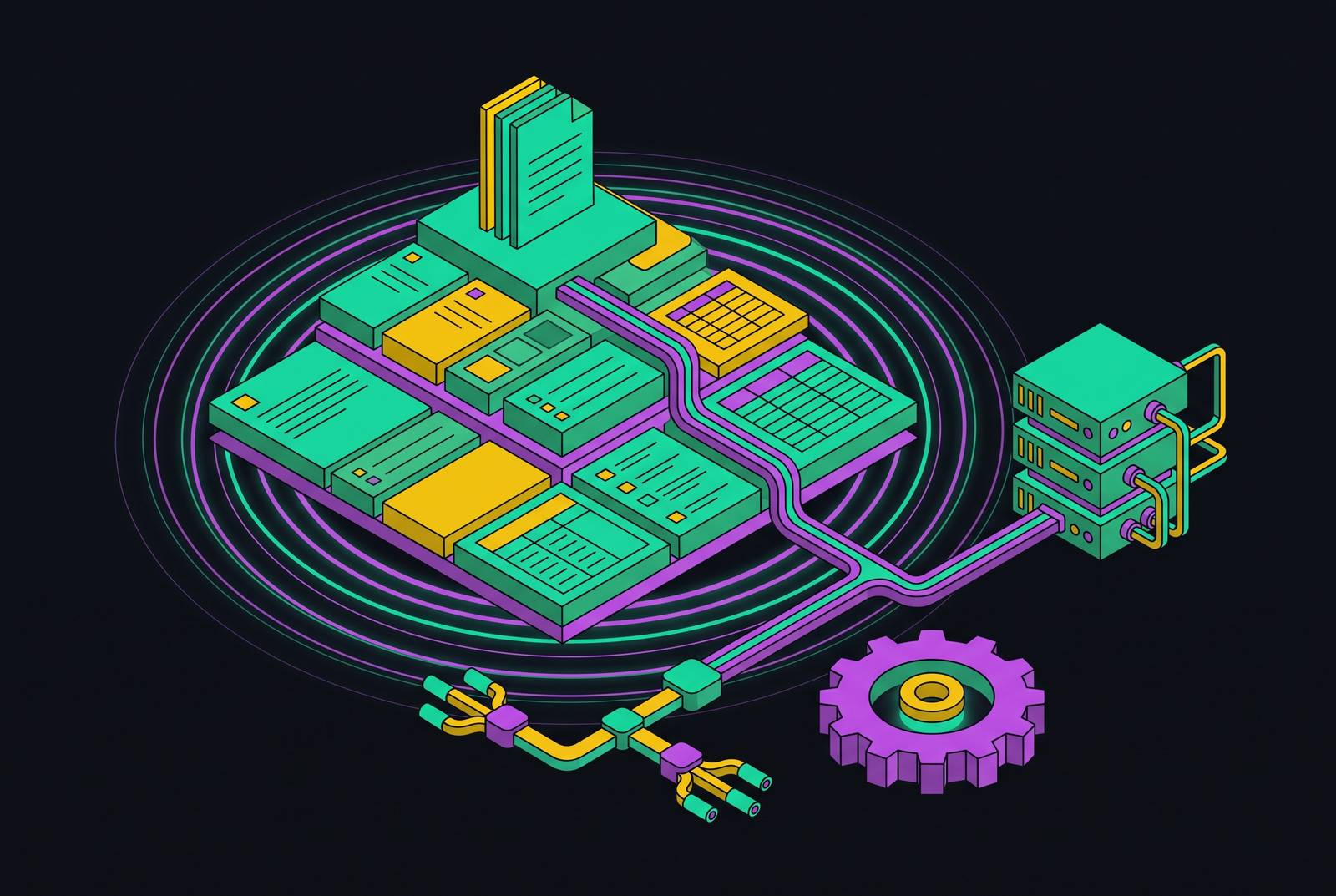
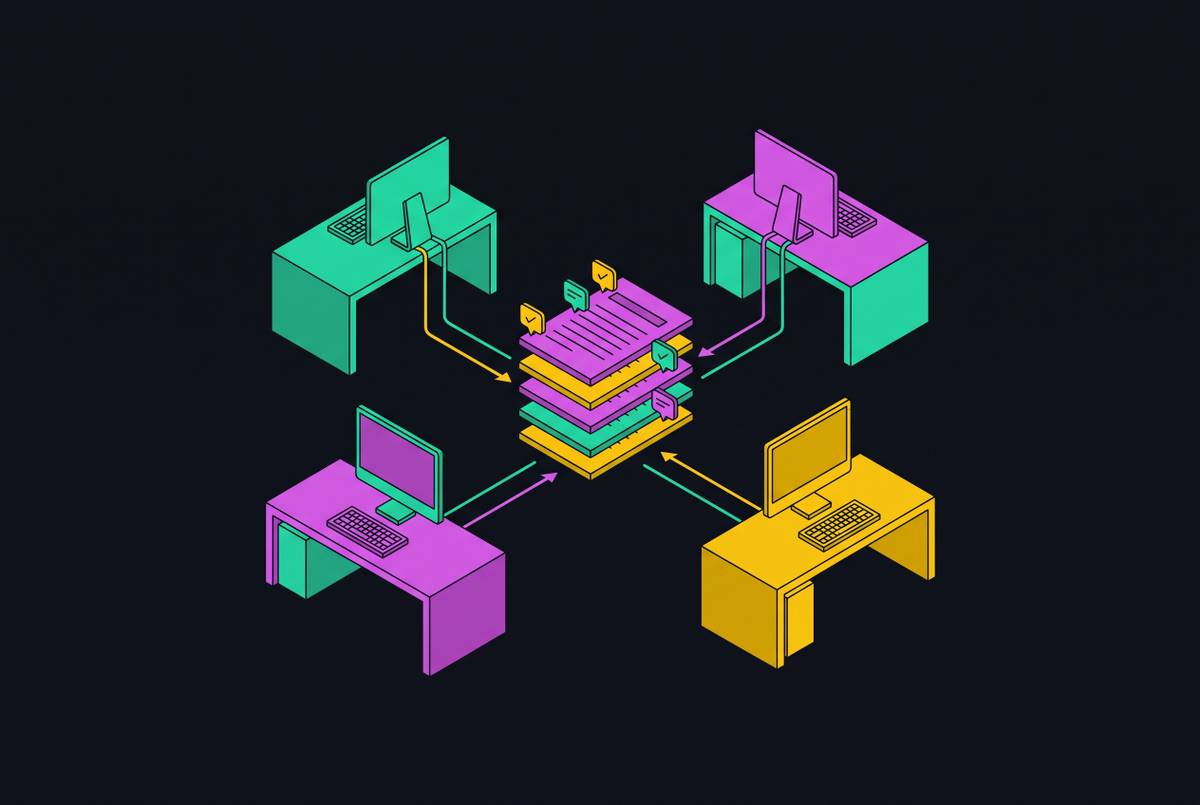
Engineering teams already write the material that makes good technical content. A spec gets revised, a release note gets drafted, an architectural decision record gets filed the day a hard tradeoff gets made. All of it sits in Notion, and all of it stays there. The material is good. Nobody notices the page changed, nobody decides whether it's worth telling customers or developers about, and nobody starts the work of turning it into something publishable. Someone has to catch the update, read it, judge whether it matters, and then begin a publishing process from a blank page, even though the substance already exists in full.
That noticing step depends entirely on a person paying attention at the right moment: watching Slack for a mention, opening Notion out of habit, or tracking down an engineering manager to ask what actually shipped and why. Attention like that is unreliable by nature. It arrives late when someone remembers two weeks after the fact, or it never arrives because the person who would have noticed was heads-down on something else. Most shipped decisions never reach an external audience because nothing connects the editorial process to the place where engineers actually write things down.
What changed in the Notion API between 2025 and 2026 that makes this tractable
Three changes to the Notion API, released between September 2025 and April 2026, remove the specific obstacles that made this gap hard to close with code. Each one on its own would have helped. Together, they turn Notion from a wiki you have to check into a system that can tell you, on its own, when something worth publishing has happened.
The first was the data-sources model, shipped in API version 2025-09-03. Before this change, a Notion "database" was a single object; a query or a write pointed at a database_id, and that was the whole model. The update split a database into a container that can hold one or more distinct data sources, and query and write endpoints now take a data_source_id instead. That sounds like a plumbing change, and it is, but it's the plumbing that lets an external system target a specific, narrow slice of a workspace, such as a set of spec documents, rather than operating on an entire database as one undifferentiated blob.
The second was webhooks, in API version 2026-03-01. Before webhooks, the only way to know a Notion page had changed was to ask, repeatedly, on a timer, whether anything was different. Polling is wasteful, and it's slow; the gap between a change happening and a system noticing it is exactly as long as the polling interval. Webhooks remove the asking. The moment a page or database entry updates, Notion pushes an event to whatever system is listening. A Notion document change can now be the first domino rather than something a script has to go looking for, which is the architectural piece that makes event-driven publishing possible.
The third was the Views API, in API version 2026-03-11, which added eight endpoints for creating, reading, updating, and deleting views programmatically, along with smart filters. A pipeline can now query the exact slice of a workspace it cares about: pages tagged "ready-to-publish," or database rows whose status just flipped to "shipped." Combined with webhooks and the data-sources model, a system can both hear about a change the instant it happens and know, precisely, whether that change falls inside the scope it should act on.
How the Notion Developer Platform turns workspace events into pipeline triggers
The Notion Developer Platform, announced on May 13, 2026, supplies the runtime that turns those API capabilities into something a team can actually build without standing up and maintaining a separate server. At the center of it is Workers, a way to run custom code directly on Notion's own infrastructure. A Worker can receive a webhook through worker.webhook(), run whatever logic the team needs, and then either write back into Notion or call an outside API, including a content-publishing endpoint. The code lives next to the data it's reacting to.
The inbound webhook mechanism flips the direction the platform used to work in. Previously, Notion only sent events outward to other systems. Now, any external system can trigger a Notion Worker, and a change inside a Notion document can set off an action somewhere else. Notion's own documentation lays out examples of the pattern: close a task automatically when a pull request merges, update a CRM record the moment a subscription changes, generate an onboarding document the day an offer letter gets signed. The same logic applies directly to publishing: mark a spec page complete, and that status change can trigger a content draft without anyone opening a ticket to ask for one.
A technical program manager at one company described the effect: Workers let teams connect directly to other tools' APIs and automate what used to be manual handoffs. The handoffs this piece opened with, someone noticing a page changed, someone deciding it mattered, someone kicking off a workflow by hand, are exactly the handoffs Workers are built to absorb.
Two more pieces round out the platform. The External Agents API, in alpha at launch, lets tools like Claude, Codex, Cursor, and Decagon act as participants inside a workspace: reading a spec document, generating content from it, and updating a status field, all without a person sitting in the middle. The Notion CLI, called ntn, lets developers and coding agents scaffold, deploy, and test Workers from the command line, using the same tools the engineering team already relies on for everyday code. Workers run free during the current beta; starting October 15, 2026, they run on Notion credits.
What makes Notion document content a reliable signal source (and what makes it noisy)
A webhook that fires on every edit to every page in a workspace is an undifferentiated stream of events, most of which mean nothing to anyone outside the team. The value of a publishing pipeline built on top of Notion doesn't come from the API alone. The workspace itself has to be structured to separate a decision worth telling people about from the ordinary churn of drafting and revising that happens on every page, every day.
The data-sources model and the Views API make that separation possible in a technical sense: a pipeline can query a specific database of spec documents, or a view filtered down to one status, instead of reacting to every block-level update across an entire workspace. But the filtering only works if someone has built the structure for it to filter on. A dedicated status property on a spec or release-note database, moving through stages like Draft, In Review, and Shipped, gives the webhook something precise to watch for: the transition into "Shipped," not the dozens of small edits that happen on the way there. Scoping an integration's OAuth permissions to exactly the databases that matter for content does the same work from a different angle: it cuts down on noise by construction, because the integration can't see anything outside the databases it was granted access to.
The same mechanical noise appears again at production scale. A Notion page isn't a flat document; it's a nested tree of blocks, and reconstructing the full content of a page means walking that tree recursively, paginating at every level, against a rate limit that averages three requests per second. A pipeline that tries to fully render every page on every single event will hit that ceiling fast, and the fix isn't cleverer code so much as fewer events worth acting on. Which changes deserve a draft is an editorial judgment, and that judgment has to live in how the workspace is organized, encoded in advance so a webhook subscriber can act on it directly.
What engineering-led teams that publish from their tooling consistently get right
Teams whose technical content developers actually read share one habit above the rest: they publish from what they already built, changelogs, specs, working integrations, rather than starting from an empty editorial brief and a topic someone picked for the week. Teams building this way are two examples of this pattern in practice, and what makes their output land isn't a particular platform or tool, it's that the writing is tied to something that actually happened.
Content grounded in a real event, a feature that shipped, a spec that changed, a pull request that merged, reads differently than content generated from a prompt or pulled from an editorial calendar, because it carries specific detail a generic brief never produces. That specificity isn't a stylistic preference for developer audiences; it's closer to a requirement. Developer trust in AI-generated tool output dropped meaningfully between 2023 to 2024 and 2025, and developers have shown little patience for content that stays at a high, generic level. Grounding a draft in a real event is what keeps the output credible to the audience it's written for.
Technical documentation is also the resource developers turn to most often when they're trying to learn something new, and documentation that's inconsistent or out of date is named repeatedly as a real obstacle to working together across teams. That makes the rate at which a team actually publishes what sits in its Notion workspace, not just the existence of good material there, something that shapes how much developers trust the product itself. The Notion pipeline described here doesn't invent this pattern. It automates a workflow the strongest engineering teams were already running by hand, where someone watched for a shipped feature and turned it into a post before the moment passed.
The quality problem that event-driven content automation has to solve
The strongest objection to a signal-driven pipeline isn't that it can't fire reliably. The webhooks and Workers described above handle that part well. What comes out the other end risks reading like filler, generic, voiceless, interchangeable with a thousand other AI-generated posts, and for a developer audience, publishing that is worse than publishing nothing.
The scale of the problem is measurable. A large majority of newly created web pages now contain AI-generated content, and a substantial share of them lean on the same handful of prompts and patterns, so much of it reads the same regardless of who published it. Practitioners who've studied the failure trace it to the instructions behind the output: a prompt that doesn't specify a voice with real edges, witty but never snarky, direct but never curt, and that doesn't include explicit do's, don'ts, and a list of banned phrases, gives the model nothing to push against, so it settles for the average of everything it's seen.
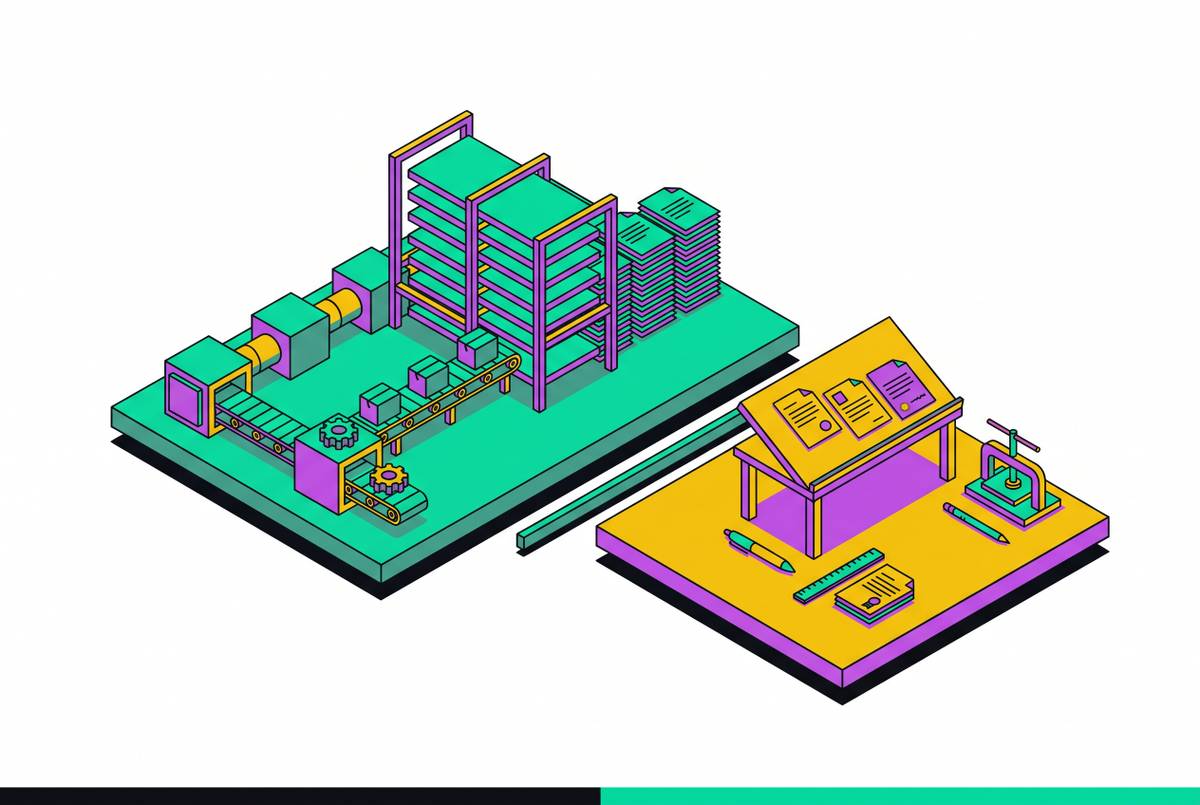
The fix is to write brand voice down with the same precision as an API spec, specific enough that someone could actually disagree with a line in it, and to build that document into the pipeline as a system prompt. The event-grounded approach helps here too, by its own construction. A draft that opens with the spec for a specific feature changing on a specific day, and what that change means for the people using the product, already has an anchor that generic content never gets. The signal that triggered the draft doubles as the brief the draft is written from, which keeps the writing anchored to specifics.
None of this removes the need for a person to look at the draft before it goes out. Human review at the right point, approving a headline, giving a draft a final read before publishing, acts as the actual quality gate, and it does that without erasing the speed automation provides. Suggest and Autopilot exist because some signals are safe enough to publish straight through, and others need a person to sign off first.
How to wire a Notion workspace into a content pipeline in practice
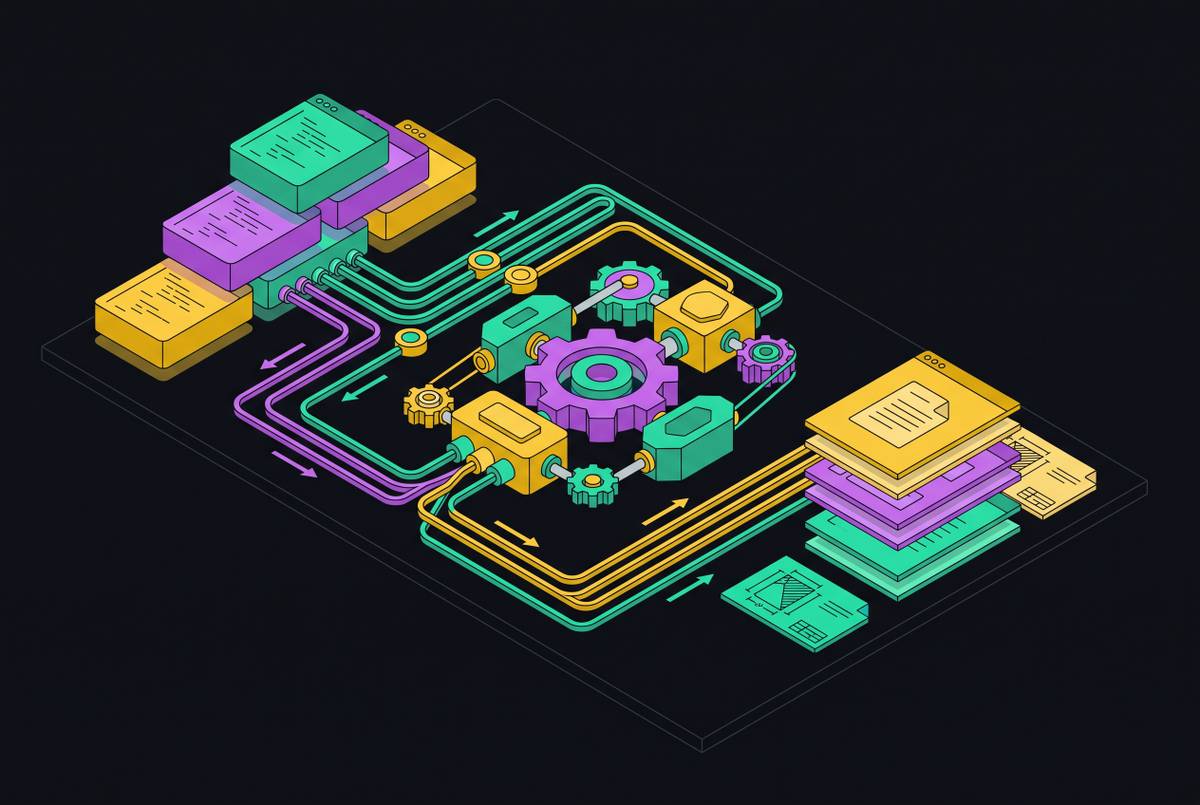
A Notion-to-publishing pipeline breaks into four stages: event detection, signal scoring, draft generation, and publication. The 2026 API changes solve the first stage natively, in a way that used to require custom polling infrastructure running on a schedule and checking for changes that, most of the time, weren't there.
Event detection means setting up a Notion Worker with worker.webhook() to receive push events scoped to the specific databases holding publishable material, release notes, spec pages, ADRs tagged "external-ready." Every incoming event should have its webhook secret checked with HMAC-SHA256 before anything else happens, to confirm the event actually came from Notion.
Signal scoring is the filter applied inside the Worker before any heavy work begins: does the status field read "Shipped," is a publishing-readiness checkbox checked. This is where noise gets cut before the pipeline spends any effort fetching or processing content, and it decides whether the system produces useful drafts or a flood of irrelevant ones. Fetching the full content of a page that passes the filter means walking its block tree recursively, and that work should run through a job queue rather than inline, synchronous calls, built around the three-requests-per-second rate limit. This is the stage where pipelines built without that constraint in mind tend to fall over once real traffic hits them. Every query and write against API versions from 2025-09-03 onward should use the data_source_id, not the database_id still visible in a workspace URL.
Draft generation takes the retrieved page content, the actual spec text, the decision rationale, the release note, and hands it to the generation layer as the primary brief, alongside the brand-voice instructions built in the previous section. The document itself is the brief. No topic keyword or calendar slot stands in for it.
Publication routes the finished draft through whichever review mode fits the type of signal: human approval of the headline in Suggest mode, or a straight path to publish in Autopilot mode for signal types the team has already learned to trust, like routine release notes. Once published, the pipeline should write the published status back into the Notion database entry itself, so the workspace reflects, accurately, what went out and when.
One decision most teams get wrong early is the authentication model. OAuth is the right choice if the integration will run across multiple workspaces or customer environments; an internal token works fine for a single team publishing from its own workspace, but it can't be distributed beyond that one install. The second place teams stumble is the rate limit, treated as a design constraint from the start.
The Notion 3.7 release adds Skills, reusable AI instruction sets that export as SKILL.md files and work across tools including Claude Code, Codex, and Cursor. A brand-voice guide maintained once, inside Notion, can travel with whichever agent is doing the drafting. The editorial standard lives in exactly one place and stays consistent no matter which tool in the pipeline is reading it.