Engineering Onboarding Best Practices at API-First Companies
Measure new hires by their first successful API call instead of orientation checklists.
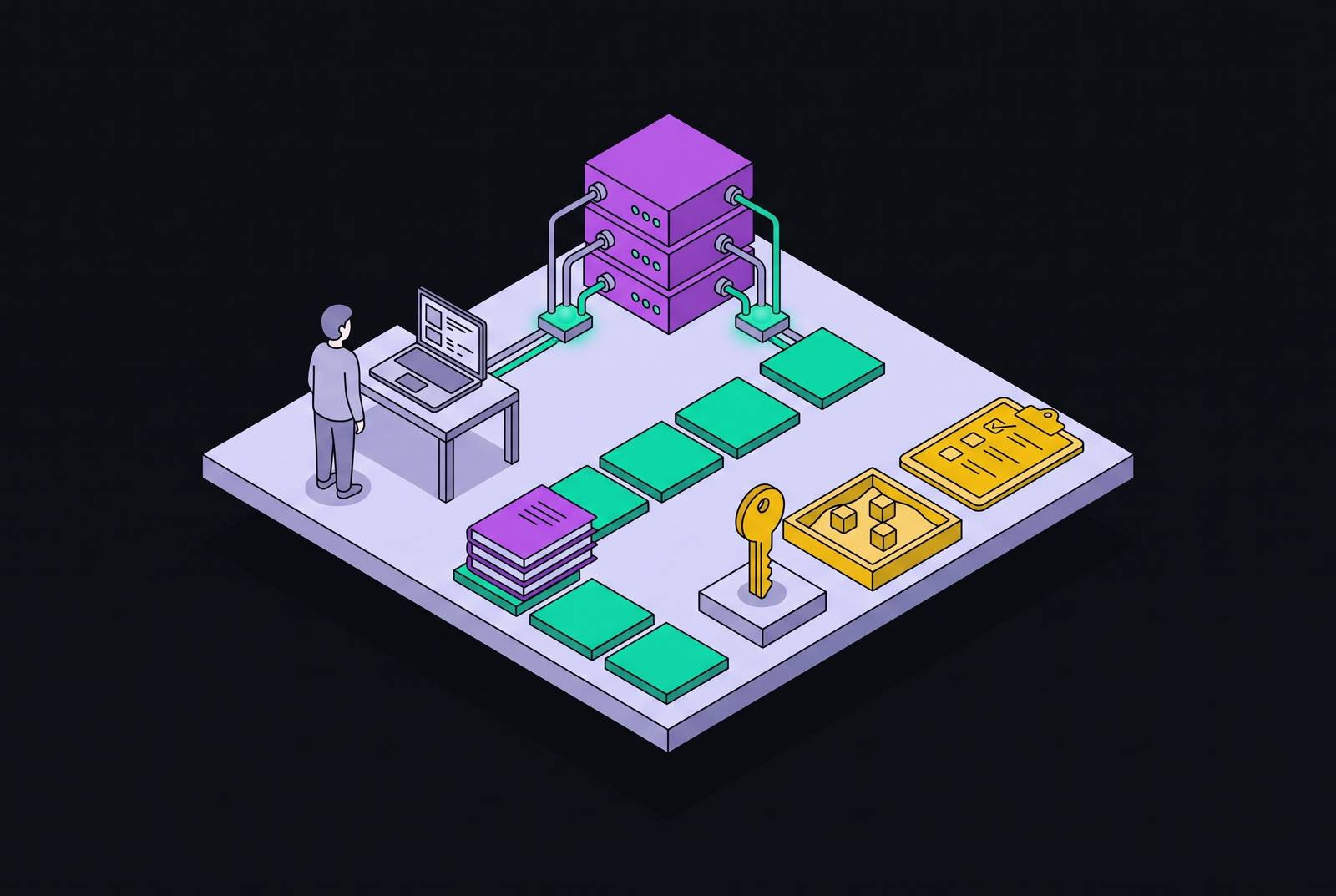
Engineering onboarding at API-first companies should be organized around Time to First Successful API Call, or TTFC. The fastest route to useful contribution begins with working access, a realistic sandbox, and documentation that makes the first request runnable. From there, tracing requests and making safe changes help the hire move from that first success to working on their own. Each onboarding practice should shorten that path while still teaching the hire what they need to work safely.
Why API-first onboarding is a different problem from general engineering onboarding
A developer joining an integration-heavy platform can complete orientation and still be unable to use the product. Missing permissions, setup instructions that are out of date, and unclear service boundaries stop the hire before they can use their engineering judgment. This is an operational failure. The immediate requirements are working credentials, sample payloads, a known-good environment, observability access, and a task that proves the hire can use the platform as customers do.
General onboarding checklists rarely establish that proof. Calendar invites and policy documents record participation, while social-only onboarding can create a good first impression without accelerating contribution. Neither shows whether a developer understands the data behind a response or can ship a safe change. Structured onboarding connects access, a defined API workflow, a mentor, and a tightly scoped early task. Its advantage is a clear path from preparation to output.
The same obstacles appear outside the company. An external developer also needs authentication guidance they can use, examples that are correct, and an environment where they can test an integration. Internal onboarding therefore exposes friction that can undermine external adoption. At API-first companies, the boundary between engineering onboarding and developer experience is narrower than a general orientation program assumes.
Time to First Call as the organizing metric for everything that follows
TTFC measures the time required to reach the first successful API call. It is a stronger leading indicator than attendance, satisfaction, or checklist completion because it tests whether the hire can actually operate the platform. Access and instructions must work together for the request to succeed.
By the end of the first couple of days, a new hire should be able to make a successful request, inspect the response, and explain the next step in the workflow. Otherwise, the onboarding design needs work.
Other signals help explain where the path breaks. For external integrations, developer drop-off measures registrants who never make a valid request, while support tickets per integration expose the help required to get through setup. Those signals complement TTFC. Internally, the metric directs attention upstream to provisioning, credentials, documentation, and sandbox quality. The test for each preparation decision is whether it reduces or increases the time needed to reach a working request with enough context to proceed.
What must be ready before the first login — environment, credentials, and documentation
Reducing TTFC begins before the developer signs in. The sandbox or test environment must be provisioned and known to work, with the necessary API keys, tokens, or OAuth client generated and delivered securely. A day-one access ticket is unfinished preparation. Every hour spent waiting for permission adds directly to the time before the hire can begin using the API.
Access also needs to cover the whole request workflow. Sample payloads, known-good request examples, and schema references should be available without requiring the hire to find the right person. Logs, traces, and dashboards belong in the initial access package with the codebase. The material the hire actually uses needs clear links to authentication patterns, rate limits, and known failure modes. An available document is not necessarily a discoverable one.
Documentation readiness is part of environment readiness. A conceptual explanation without runnable code can delay the first call as effectively as a missing key. Quick-start guides should serve implementers, while deeper architecture references support the questions that follow. Each endpoint should have copy-paste examples in the languages the team uses, with enough authentication guidance to run them. This preparation cannot compensate for opaque provisioning, however. Manual key generation and ticket-dependent environment setup remain bottlenecks even when the written instructions are clear.
Sandbox design and the feedback loop that makes the first call succeed
Access opens the sandbox, but feedback makes it useful. An environment built for teaching lets the hire send real authenticated requests with test data, look at the actual responses, and trace what happened without affecting production. It connects an action to an explanation. That connection is what documentation alone cannot provide.
The environment should expose realistic behavior, including errors. Stub responses that conceal how the API behaves leave the hire unprepared for failures beyond the happy path. Request logs, headers, status codes, and response bodies should be visible in real time so that the developer can inspect the result of each attempt. When a request fails, the error should help explain what happened and point to documentation on that failure. A raw 400 or 500 offers little help with the next decision.
This feedback loop serves the same purpose as running tests in a CI environment. Failure becomes cheap, fast, and informative. TTFC then reflects more than successful setup because the hire can connect the request to the system’s behavior. The sandbox becomes the primary teaching instrument.
Keeping that environment working takes engineering work, which lean teams have good reason to resist. The comparison, however, is not between sandbox maintenance and no cost. Uninformed production calls create support work, while poor integration experiences increase queries and developer drop-off. At scale, a maintained sandbox is cheaper than leaving those costs to accumulate through failed integrations and repeated intervention.
The milestone sequence that replaces generic orientation checklists
The first successful authenticated sandbox call establishes that credentials, environment, and basic authentication understanding work together. It is the TTFC milestone. The next milestone is a traced request. The hire must inspect the request and response cycle, read the logs, and explain what happened, proving both observability access and an initial ability to debug.
That step should come before the first pull request because the hire needs to understand how the system behaves to change it safely. The first PR can be a documentation fix, a known edge case, or another small, safe change. Its purpose is deliberately narrow. It shows that the hire can find their way through the codebase and review process without needing to know the wider architecture for their first contribution.
The sequence then moves to a production-adjacent change. A low-risk feature or bug fix touching real systems under review tests readiness for the main engineering workflow. Only after that does the first independent ticket establish operational completion of onboarding. The hire can scope and deliver work independently.
These milestones also provide a shared path across hires. Two engineers with similar experience should not have sharply different ramp times because one found a current document while the other followed a stale guide. Defined proof points make those differences visible. They distinguish a delay in access from a gap in debugging knowledge or readiness for independent work, giving the team a more useful account of progress than orientation completion.
Authentication, rate limits, failure modes, and the domain knowledge a new hire needs to operate safely
A working request is only the start of safe productivity. The hire also needs to understand how credentials are structured, how tokens are scoped, and how to rotate them safely. Authentication and authorisation errors require distinct interpretations within the system. Without that distinction, successful setup can conceal weak understanding of why access succeeds or fails.
Rate limits add another operational constraint. New hires need to know the limits, how they are enforced, and how to read the relevant headers. They also need to understand what happens when test calls exhaust a shared quota. Embedding this knowledge in sandbox work connects the rule to its consequences. Triggering a rate-limit error and interpreting an actionable response teaches more than reading the limit in isolation.
Schema knowledge gives similar depth to the first successful payload. The hire should understand the data model, know which fields are required and which are optional, and be able to tell valid and invalid requests apart. Examples of failure are necessary because a developer who can reproduce success may still be unable to diagnose an unsuccessful call.
Observability connects these areas to the running system. Common error patterns, operational meanings of error codes, and the first place to investigate a failure should be part of the onboarding path. The hire must also learn to trace requests and distinguish healthy from unhealthy responses in dashboards. This knowledge turns a short TTFC into genuine progress and helps the hire move beyond a fast demonstration and repeated dependence on senior engineers.
How the buddy and mentor structure protects senior engineering bandwidth during ramp
Every unresolved onboarding gap consumes someone else’s context. Without a defined support structure, questions about access, local debugging, and architectural intent compete for the attention of the team’s most experienced engineers. A buddy and mentor arrangement routes that work more deliberately.
The roles need distinct responsibilities. The buddy handles logistical questions, informal norms, and introductions, providing a person the hire can approach without judgment. The mentor handles architecture, design discussion, and code review quality, including reasoning that written instructions cannot fully capture. The manager owns role clarity, milestone tracking, and escalation.
For API-first teams, the buddy also provides a route into local knowledge before a confused question reaches the whole channel. Authentication edge cases, undocumented rate-limit behavior, and debugging habits can be explained without interrupting everyone. Microsoft’s research on its buddy program found that hires who met frequently with their buddy reported that the buddy helped them become productive quickly. It also found that onboarding satisfaction increased substantially over the first months for paired hires.
Turning good onboarding documentation into a system that reduces variance across every future hire
Documentation turns repeated explanations into a shared system, but only if it stays aligned with the API. A known-good first call should be versioned with the interface it demonstrates. If an endpoint change breaks the example, that is a documentation bug to address.
A schema reference should describe the data model as it is now, while runbooks should explain common failures in the words of the engineers who debugged them. Abstract error tables are not enough. An architecture decision record trail explains the reasoning behind the API’s design, so later hires can learn what a boundary or behavior is and why it exists.
Stale instructions create more than individual delay. They also generate support work for the engineers who must identify the mismatch and unblock the hire. Merged pull requests, specification changes, and new endpoints should therefore trigger documentation updates when they affect onboarding examples, authentication patterns, or rate-limit behavior. These are engineering events with documentation consequences. Monitoring them keeps onboarding current without depending on a separate editorial process to rediscover what changed.
Automated publishing pipelines can use those signals, including release events, to update documentation or publish changelog posts so the explanation is ready when the change ships. The wider discipline remains explicit ownership, bottleneck removal, and measurement of where hires stall. That discipline also governs external developer trust. The documentation practices that get a new hire to a first API call in two days are the practices that help an external developer reach theirs in minutes. TTFC is therefore not merely an internal ramp metric, but a product philosophy that treats the path to a working request as part of the API itself.