Open Source Project Contributor Onboarding Guides
Removing friction from first contributions helps maintainers attract contributors who will stay.
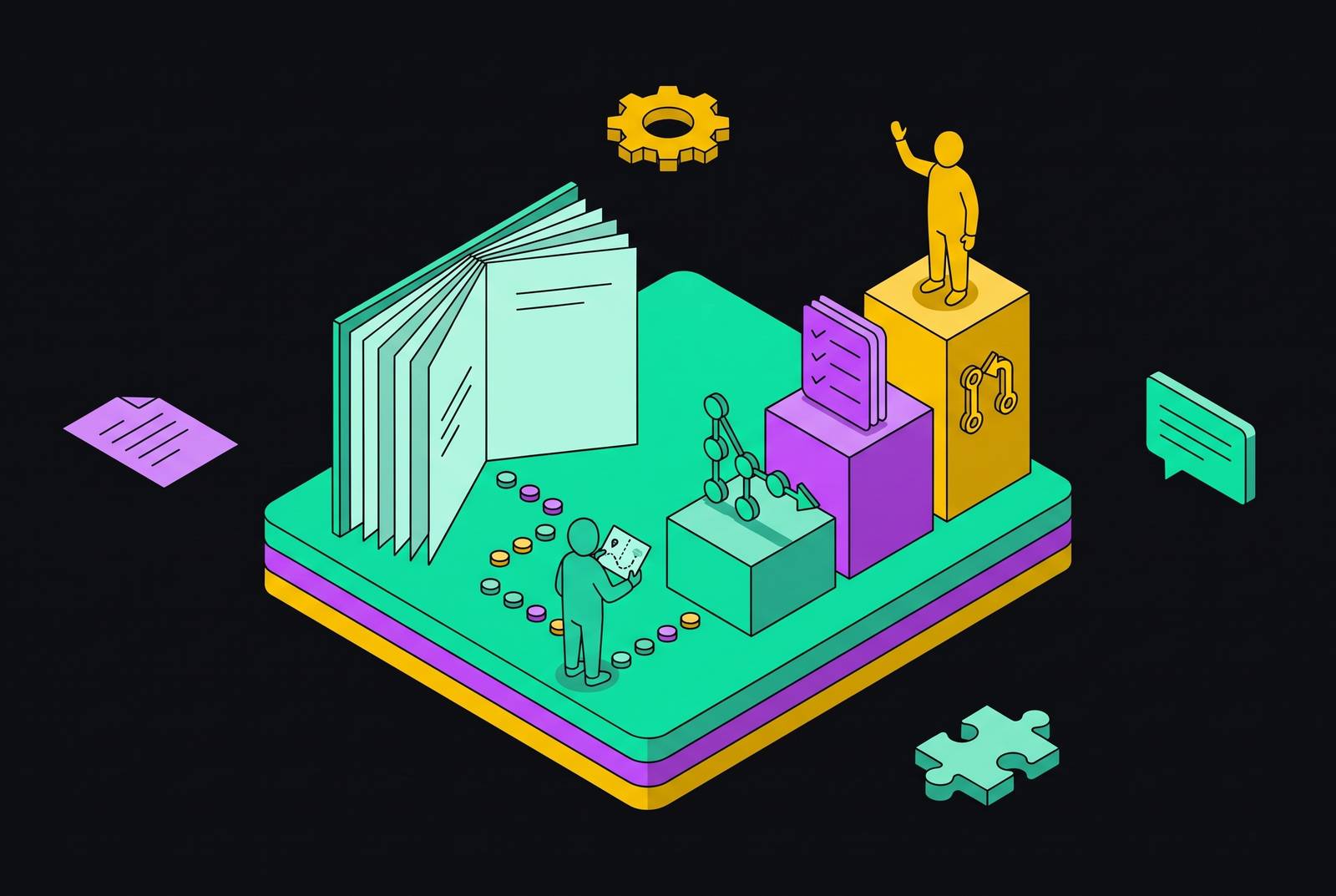
An open source project contributor onboarding guide is a system for removing friction between a developer’s first interest and a first merged contribution. Its purpose extends beyond that merge. Planned onboarding helps genuine contributors come back, so their progress depends less on when maintainers have time and on knowledge they cannot get.
Why most contributor onboarding fails before a developer writes a single line of code
A project can regard itself as open while a newcomer cannot find a place to start. Public code does not make the contribution process legible. Staff and longtime contributors know where people discuss the work, how to run tests, and who needs to approve the work so it can move forward. Familiarity conceals the gaps in those instructions. What feels obvious from inside the project can therefore become an obstacle before a developer writes any code.
The loss begins before the first contribution lands. A project may interpret that absence as a shortage of interested developers when its process is losing people who already want to participate. Meanwhile, documentation becomes unclear, unfinished, and unstructured through accumulated inattention. The failure is difficult to see precisely because the people encountering it have not yet established a relationship with the project.
What to audit before writing a single word of contributor documentation
Fresh eyes are a prerequisite for diagnosing that failure. Before writing new documentation, maintainers should ask someone who does not know the project to try following the process already in place. The test is whether public instructions explain how code reaches production, who can trigger a release, and how testing happens. An answer held only in maintainer memory is a documentation gap. Contributors need a written QA process to know what work will pass review.
Ushahidi’s onboarding retrospective identifies three useful areas for this audit. Getting-started guides need to be findable, coherent, and complete, while communication and coordination need to be visible in public channels. The code review and merge process also needs a public description. Maintainers should check whether CONTRIBUTING.md exists at all, since having the file shows that someone has thought about how newcomers get started. This audit is not a one-time cleanup, because changes to the project can introduce assumptions that earlier instructions never needed to explain.
The CONTRIBUTING.md file as the system's load-bearing document
CONTRIBUTING.md uses what the audit found to set out rules for contributions that everyone can follow. It should answer the questions a developer has before submitting work, so they have less need to ask a maintainer for help. Placement is part of that function. The file belongs in the root directory, the docs folder, or the.github folder, with a link from the README. A complete document that newcomers do not encounter cannot support independent progress.
The Python Developer’s Guide provides a useful standard for the substance of that document. It asks contributors to consider whether a change is necessary and to make minimal, focused changes. It also calls for following existing coding style and patterns, writing tests that exercise the change, and keeping backwards compatibility with prior releases in mind. Together with the project’s written review and merge process, they explain both what a contribution must contain and how it will move forward.
How a Code of Conduct functions as infrastructure, not decoration
A Code of Conduct adds the social contract to that procedural structure. It tells newcomers what treatment they can expect before they invest time or expose their work to public scrutiny. The commitment must be enforceable in practice. That means spelling out what happens when someone breaks the rules, how to report it in private, and having maintainers ready to act. An established template such as the Contributor Covenant provides a starting point without requiring a project to draft from scratch. Putting it in place at launch treats community safety as infrastructure, whereas introducing it only after a conflict reveals that the question was left unresolved.
Designing the first-issue experience so a newcomer can close a task without asking for help
Writing a usable first-timer issue can take longer than fixing the problem. That is an investment in a contributor. Ushahidi’s retrospective describes the work required to explain what needs doing, where the relevant code lives, and what the contributor must do. The issue needs enough detail for someone new to the project to work through it on their own.
Begin with smaller issues that are not demanding to review, allowing the relationship to develop before either side commits substantial time. Labels then need to match the help each issue offers. “Good first issue,” “beginner-friendly,” and “help wanted” serve different populations and should not be treated as interchangeable invitations. Labels also need to stay up to date when someone claims or resolves an issue. Documentation fixes, test additions, accessibility improvements, issue triage, and localization are legitimate starting points, broadening participation beyond code-only tasks.
Removing the environment setup blocker that kills contributions before they start
Even a well-described task stalls if the contributor cannot run the project. Ushahidi identified environment setup as one of its biggest onboarding blockers after assuming that getting the software running locally was a solved problem. Undocumented environment assumptions were stopping contributors before they could begin. This is exactly what the fresh-eyes audit should expose. A maintainer’s configured machine does not establish that the written installation sequence is complete.
Setup documentation should state language runtime versions, package managers, and system dependencies explicitly. The installation sequence needs testing on a clean machine, followed by a command or test that confirms the environment works before the contributor changes anything. When people keep reporting the same failures in issues and Discord, the fixes should go into troubleshooting guidance so people can find help without asking again. Automation can reduce the remaining variance. Scripts, dev containers, or one-command setup sequences remove undocumented manual steps, but the documentation still needs to explain prerequisites and how to recognize a working installation.
Open communication channels and how to make asynchronous coordination visible to newcomers
Once the environment works, contributors need to see how the project coordinates its work. Otherwise, submitting a PR remains an isolated transaction with no path into ongoing participation. Public issue and PR discussions should explain why decisions were made as well as what was decided. This makes the decision process visible to outsiders. Recorded walkthroughs and written meeting notes also let people who cannot attend community calls see how decisions are made.
Visibility also requires a map of where conversations happen. A developer hub or community landing page can show newcomers where different discussions happen so they do not have to find their way through one overwhelming channel. For contributors, the practical step is to comment on an issue before coding. Onboarding documentation should make that expectation explicit because it surfaces intent, helps avoid duplicated work, and introduces the contributor to maintainers before a submission arrives.
What maintainers actually look for in a first contributor, and how that shapes what onboarding must signal
Removing friction does not mean optimizing for submission volume alone. Maintainers invest review time in people whose interest in the project makes a continuing relationship worthwhile. A Wasp maintainer writing in August 2026 described the ideal contributor as someone who uses and understands the project and wants to improve it for themselves, others, or an interesting technical problem.
The maintainer’s examples show how that interest becomes legible. Craig, then a contributor whom the project did not know, sent in a formal LaTeX document with a proposal for language grammar and later completed three summer internships, during which he built a big part of the Wasp compiler and language server. In another case, @nodtem66 conducted independent investigation and experiments that unblocked progress on Windows support and became a brainstorming partner. Both examples show investment in the project itself. Their significance was not simply the appearance of a polished submission.
The same maintainer contrasts those relationships with contributions driven by PR counts, CV entries, or Hacktoberfest completions. AI has made that distinction harder to assess because a substantive-looking contribution may contain little understanding behind it. Presentation is no longer a reliable shortcut. Onboarding therefore needs to give contributors ways to show genuine interest by introducing themselves, explaining the problem, and taking part before code review begins.
How contributors should communicate their motivation, and how onboarding documentation should prompt this
To make that interest visible, CONTRIBUTING.md should invite contributors to explain why the project excites them, what they have used it for, and why they want to help. These introductions help maintainers guide the work and see what kind of relationship might grow from it. Sincerity is more useful than a polished pitch. The prompt should also ask contributors to comment on an issue before coding, establishing their presence before either side invests in a review.
The Wasp maintainer’s advice is explicit about writing. Contributors should not use AI to write PR descriptions or other text that participants must read. For non-native speakers, the advice permits only minor grammar correction, whether through carefully constrained AI assistance or another tool such as Grammarly. An imperfect human-written description is more trustworthy in this context than polished generated text.
Project policies differ, so onboarding must state the local rule. The Apache Software Foundation uses the generated-by: token in commit messages to provide machine-parsable provenance for AI-assisted work. The Linux Foundation permits AI-generated code or content when the tool’s terms do not conflict with the project’s license, IP policies, or the Open Source Definition. These approaches address provenance and permission explicitly. Leaving the policy unwritten leaves contributors uncertain and maintainers to decide whether to trust contributions through default skepticism.
Mentorship, recognition, and the feedback loop that converts first contributors into returning ones
The first merge is where retention work begins. Naming contributors in changelogs, blog posts, or community calls gives them a public record they can use in their portfolios and shows people who might join that their work will be noticed. Celebrating a first merged PR also shows contributors that they belong before they try something harder. Contributors can receive that recognition regardless of the size of the change.
Recognition should be paired with a direct request for onboarding feedback. A prompt in the first-issue template or post-merge message reaches contributors while the experience is still relevant, rather than hiding the request in a survey they may never find. The response must lead to documentation changes where needed.
The longer path also needs a written description. Contributors should be able to see how participation can progress from first issues to test-writing, code review, and mentoring newcomers. Mentorship then returns accumulated knowledge to the project instead of leaving it concentrated among established maintainers. Good first-issue design attracts genuine participants, recognition supports their return, and their feedback improves the next newcomer’s experience. Each stage strengthens the one that follows.
How teams that ship continuously can keep contributor documentation current without a dedicated editorial process
For lean teams, sustaining that system is harder than drafting its first version. Teams can make documentation updates part of what they ship with a release instead of assigning them as separate editorial work. When merged PRs change the development environment, test suite, contribution workflow, or API surface, they should prompt a check of the documentation as part of the PR process. The work supplies the maintenance signal. A quarterly review is too detached from the changes that make instructions inaccurate.
Release notes and changelogs can also explain changes to the contribution workflow alongside changes for users. Teams with the bandwidth to build a monitoring pipeline can use merged PRs, spec changes, and API diffs to surface documentation gaps. Such a pipeline can flag when a change in behavior calls for changes to CONTRIBUTING.md, setup instructions, or reference documentation, so teams do not need a separate editorial calendar. The onboarding system can then evolve with the project, preserving the path that contributors depend on as they move from first interest to sustained participation.